Toilets 4 Life Phase II is complete. Over the past year the project delivered five sanitation facilities, two on-site wastewater treatment systems, and two municipal sanitation trucks to Bugiri Municipality in eastern Uganda. Every planned deliverable is finished, and the final report has been submitted to The Rotary Foundation.
Phase II was funded through Global Grant #2569338, a $206,248 partnership between the Rotary Club of Bugiri Municipality (District 9213), Riverside East Rotary (District 5330), and The Rotary Foundation. This post recaps all of Phase II, from the first training sessions in December 2025 to the final report in November 2026.
Why Bugiri
Bugiri Municipality is home to roughly 45,650 people. Before Toilets 4 Life began, 76% of them had no access to safe water. The municipality had three public pit latrines, two of which no longer worked, and no sewage system. The result is cholera, typhoid, and dysentery, which hit women, girls, and children under five hardest.
Phase I began addressing this in 2023. Phase II added more facilities, on-site wastewater treatment, and the trucks the municipality needs to collect waste and empty the toilets.
What the grant set out to do
Phase II had five aims:
- Expand access to safe, gender-sensitive sanitation, including for persons with disabilities
- Promote hygiene education and behaviour change
- Introduce wastewater treatment technology new to the municipality
- Strengthen the municipality’s capacity to manage solid waste and faecal sludge
- Reduce exposure to waterborne diseases such as cholera and typhoid
The project fell under four of Rotary’s areas of focus: water, sanitation and hygiene; disease prevention and treatment; supporting the environment; and community economic development.
What was delivered
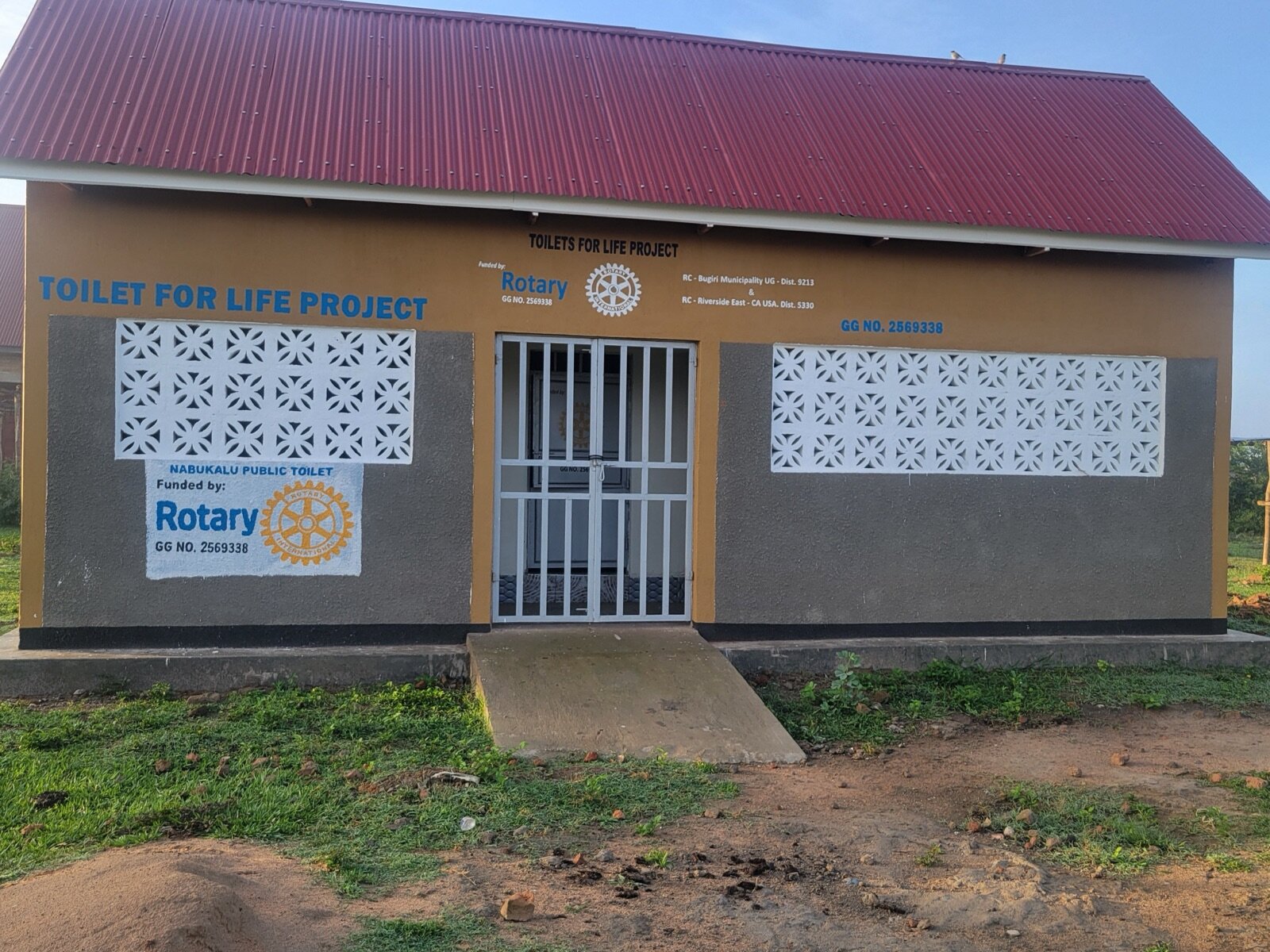
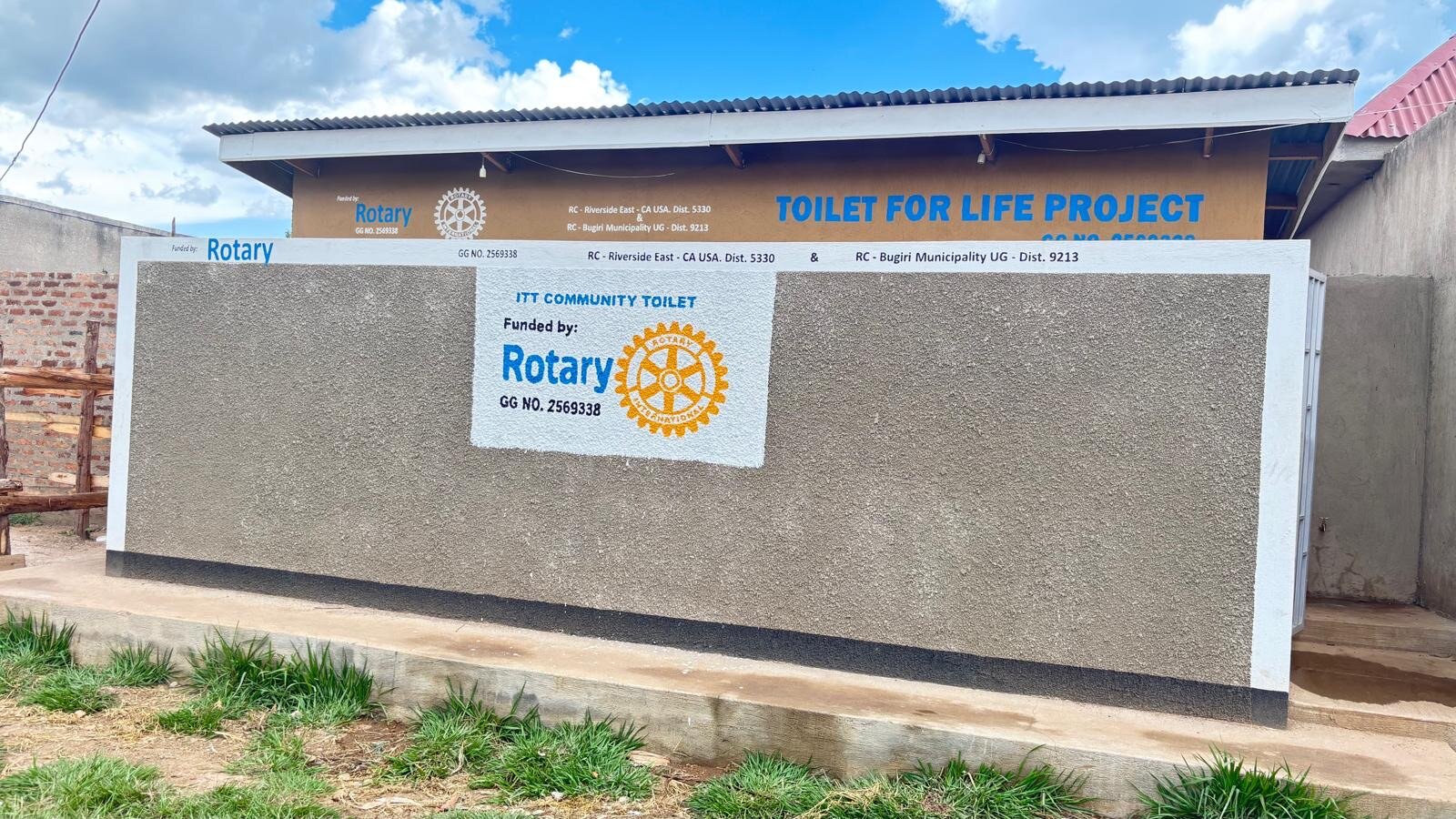
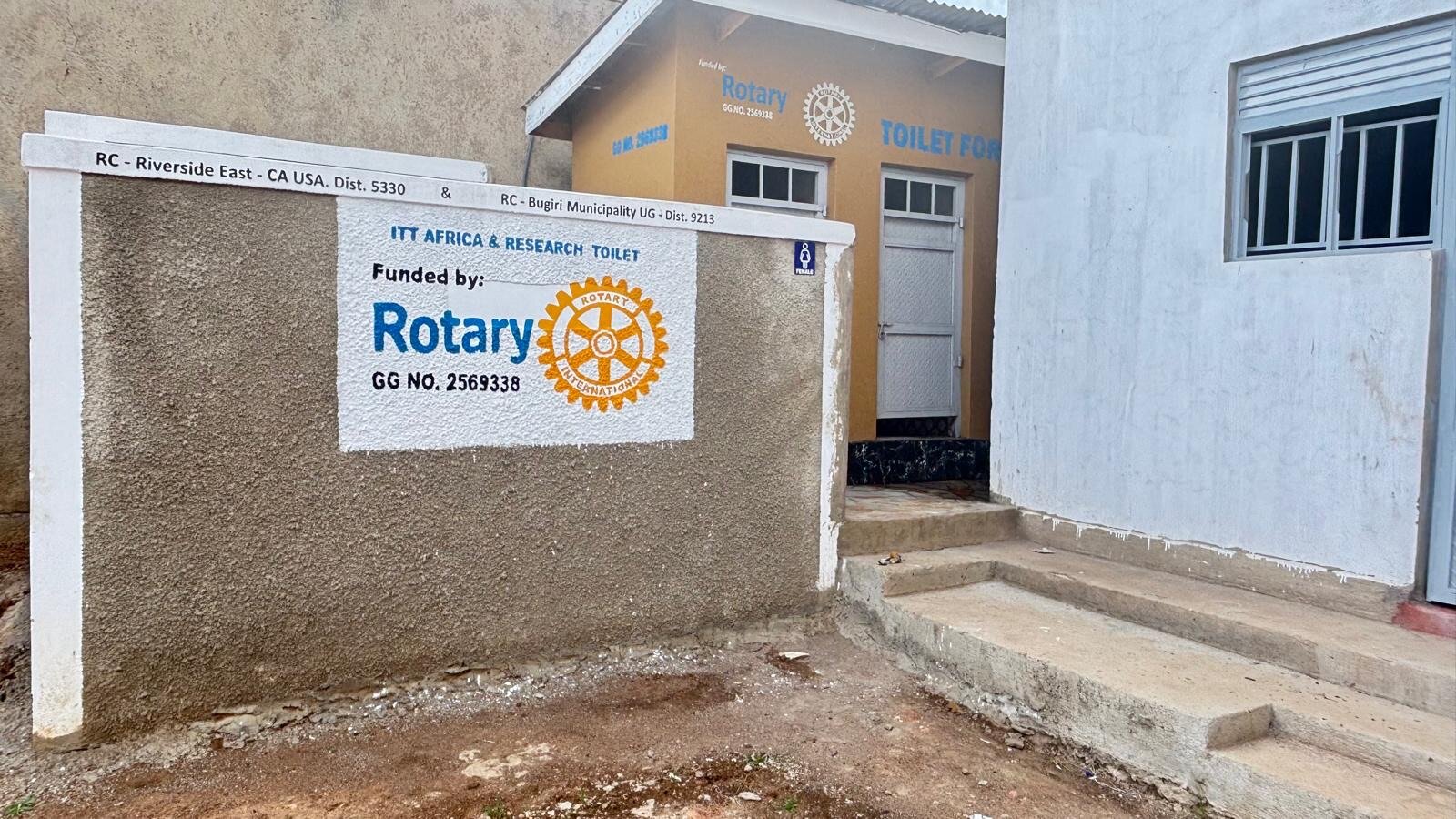
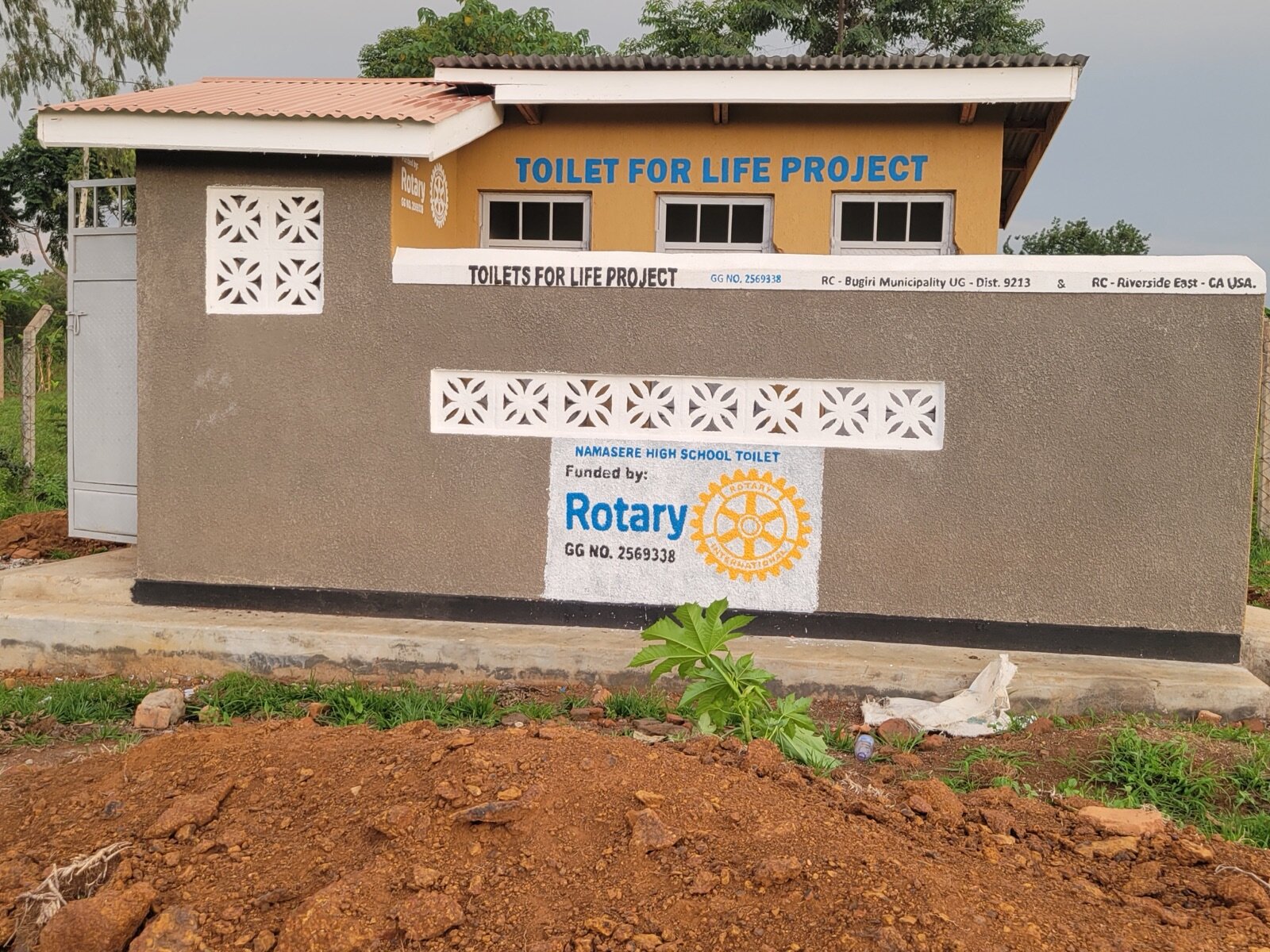
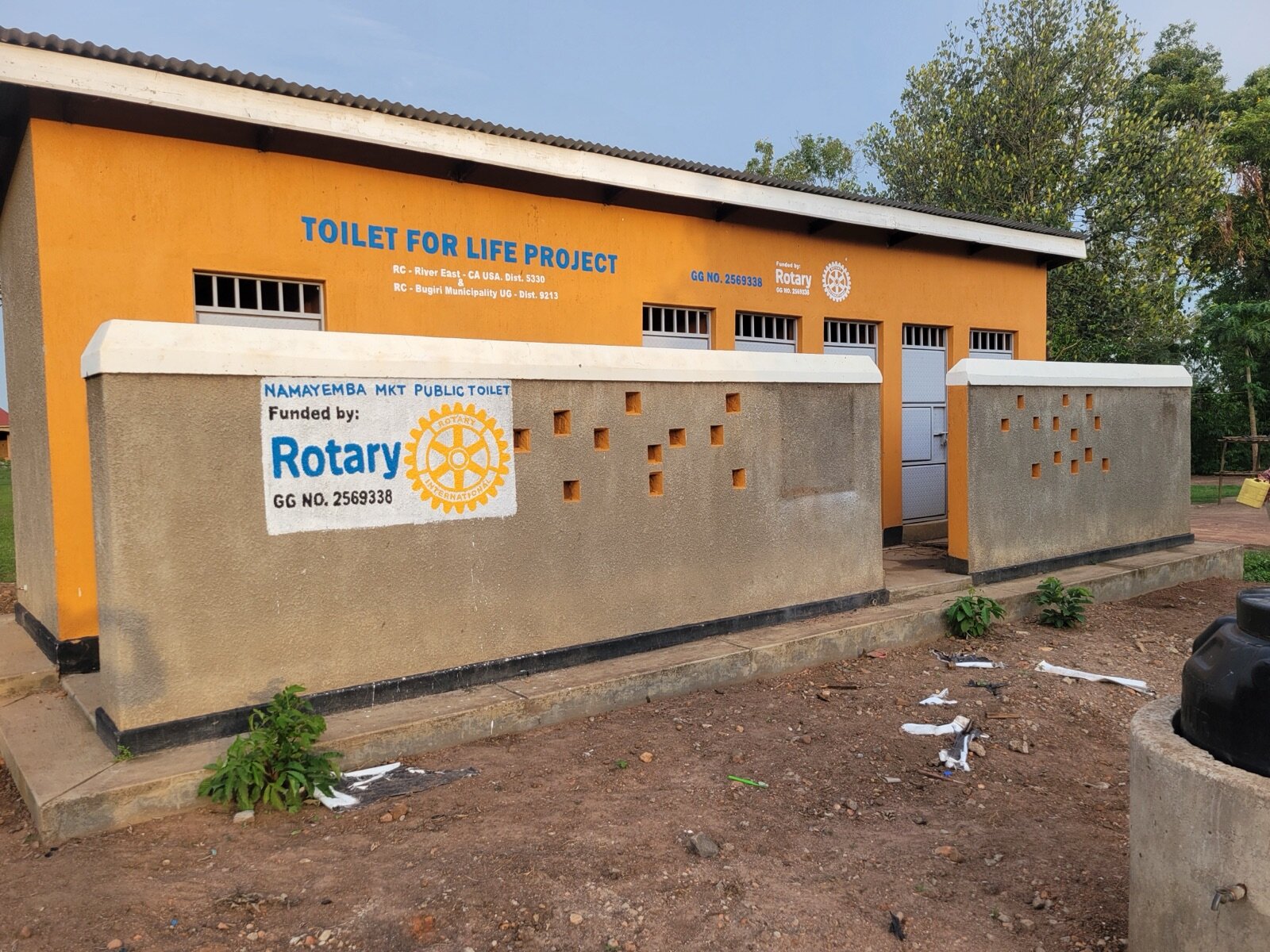
Five sanitation facilities
The new facilities are at:
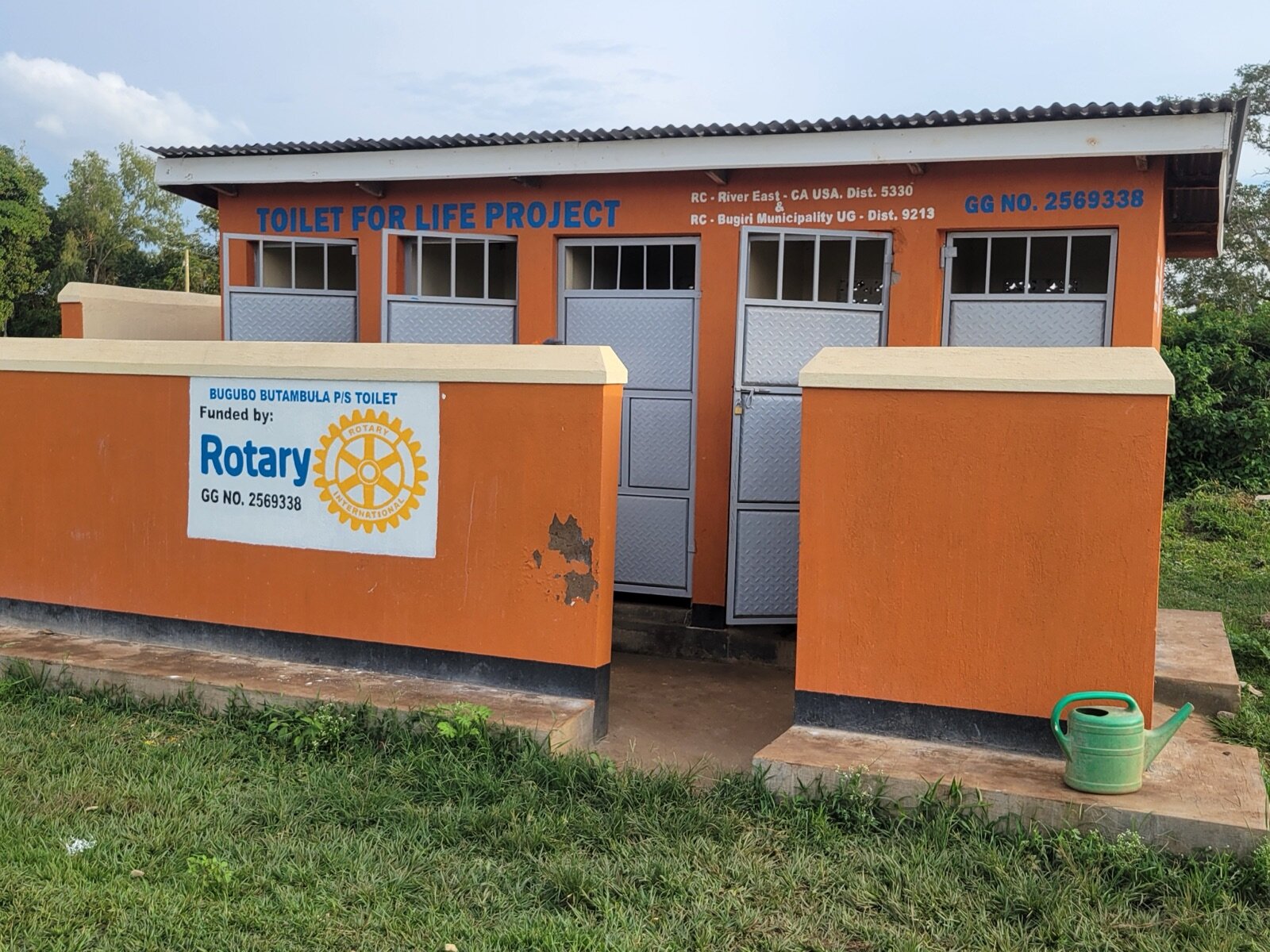
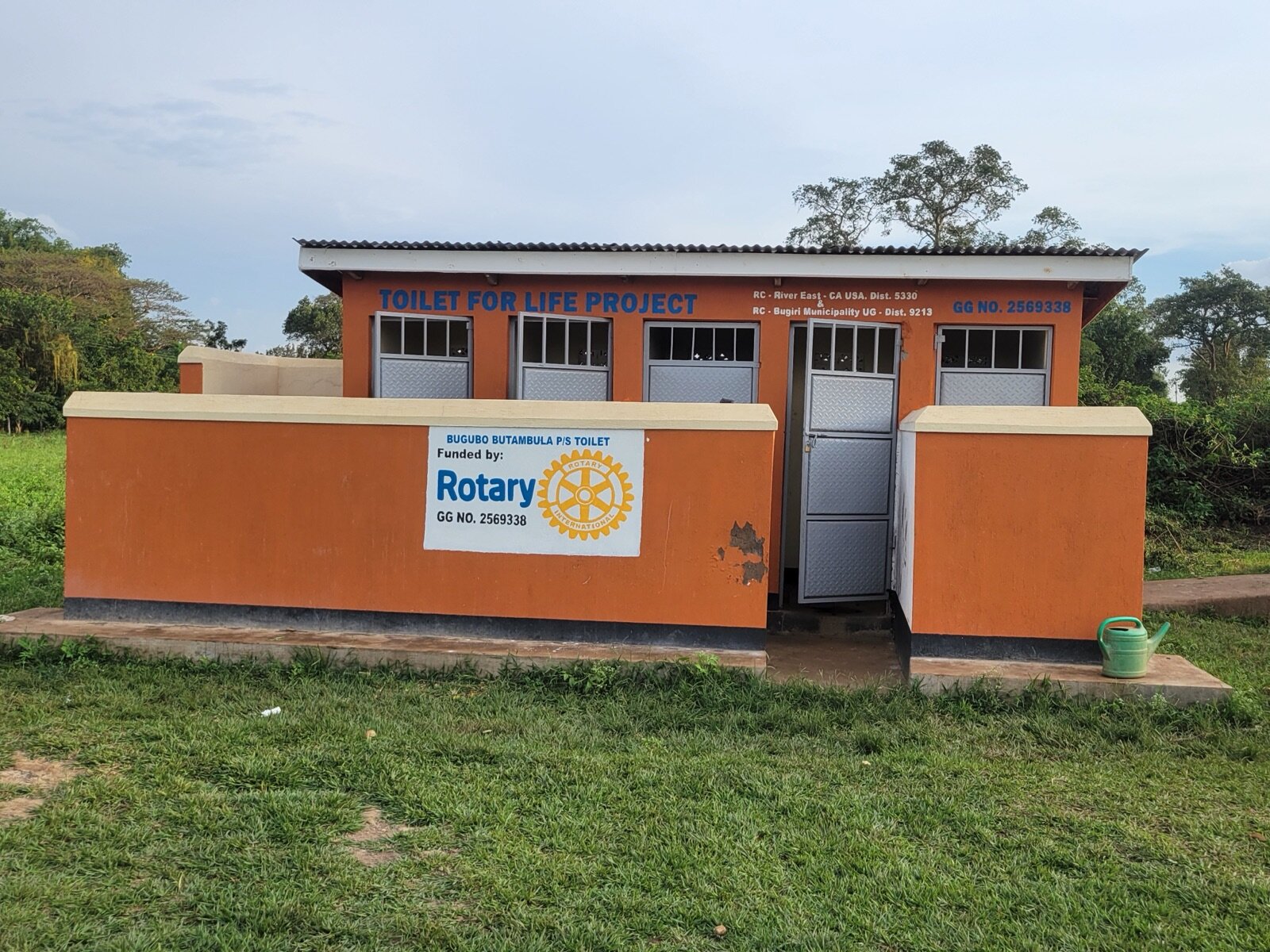
- Bugubo Primary School
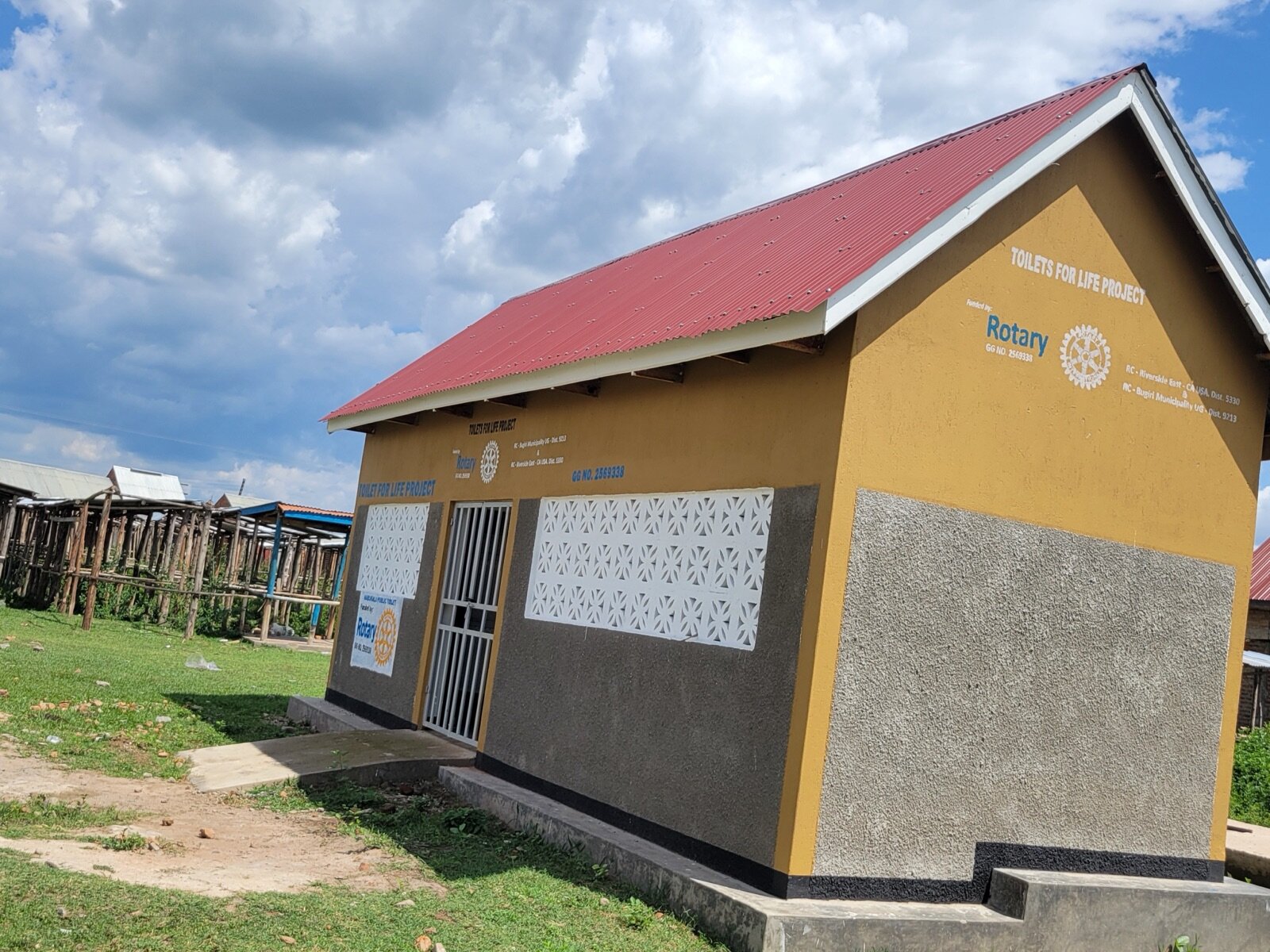
- Nabukalu Market
- Kireka-Ndifakulya community
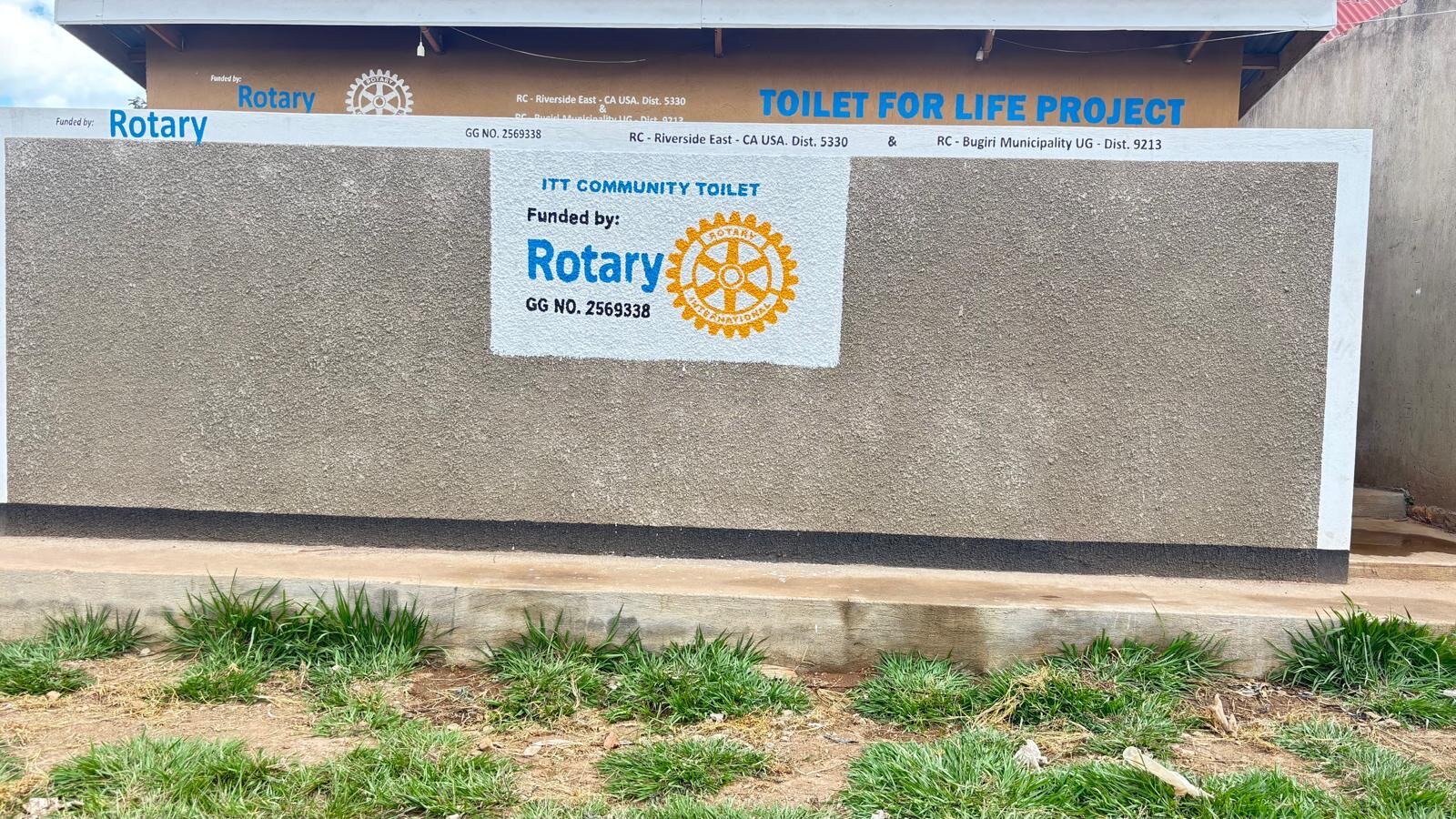
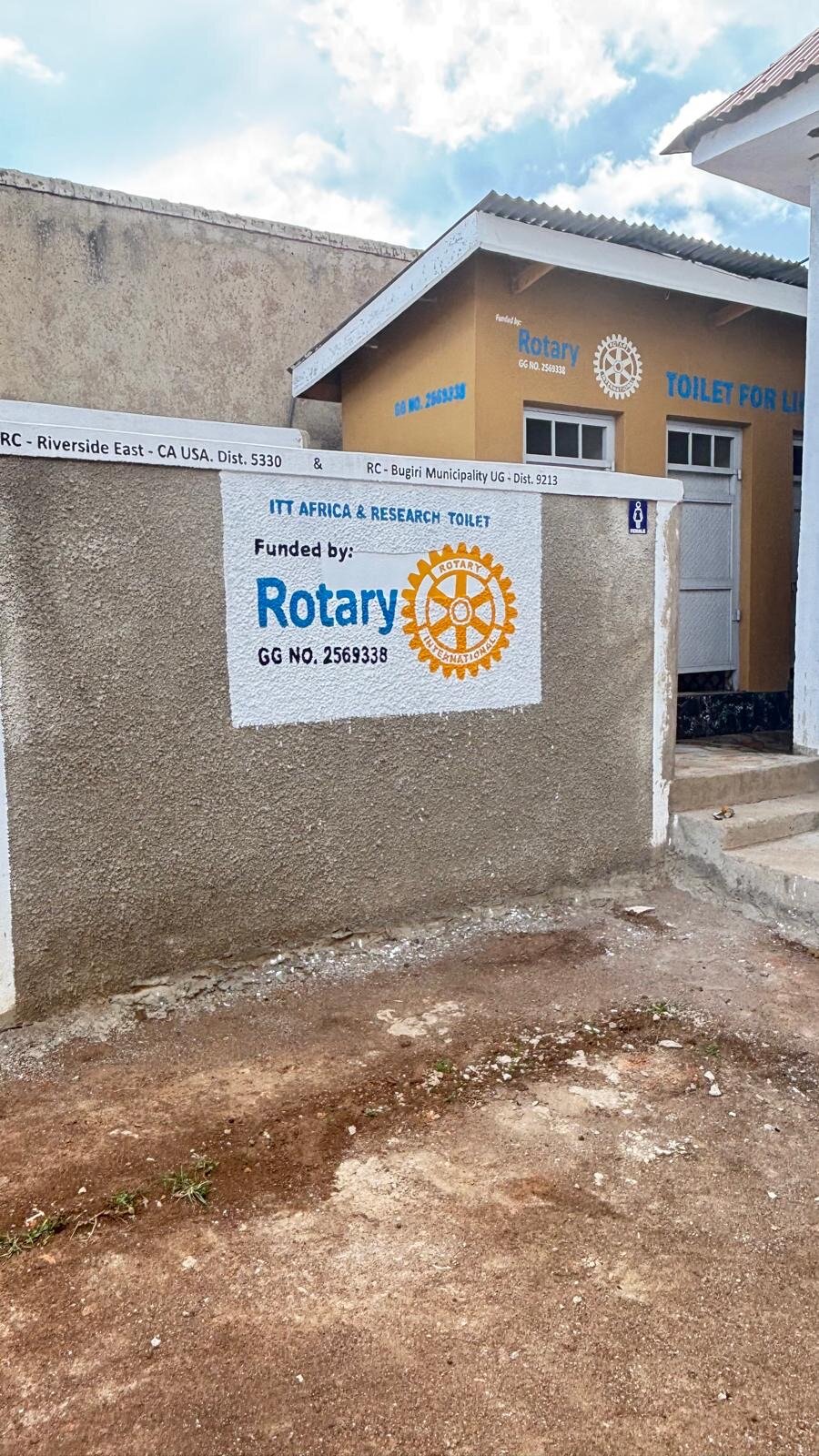
- ITT Vocational Training Centre
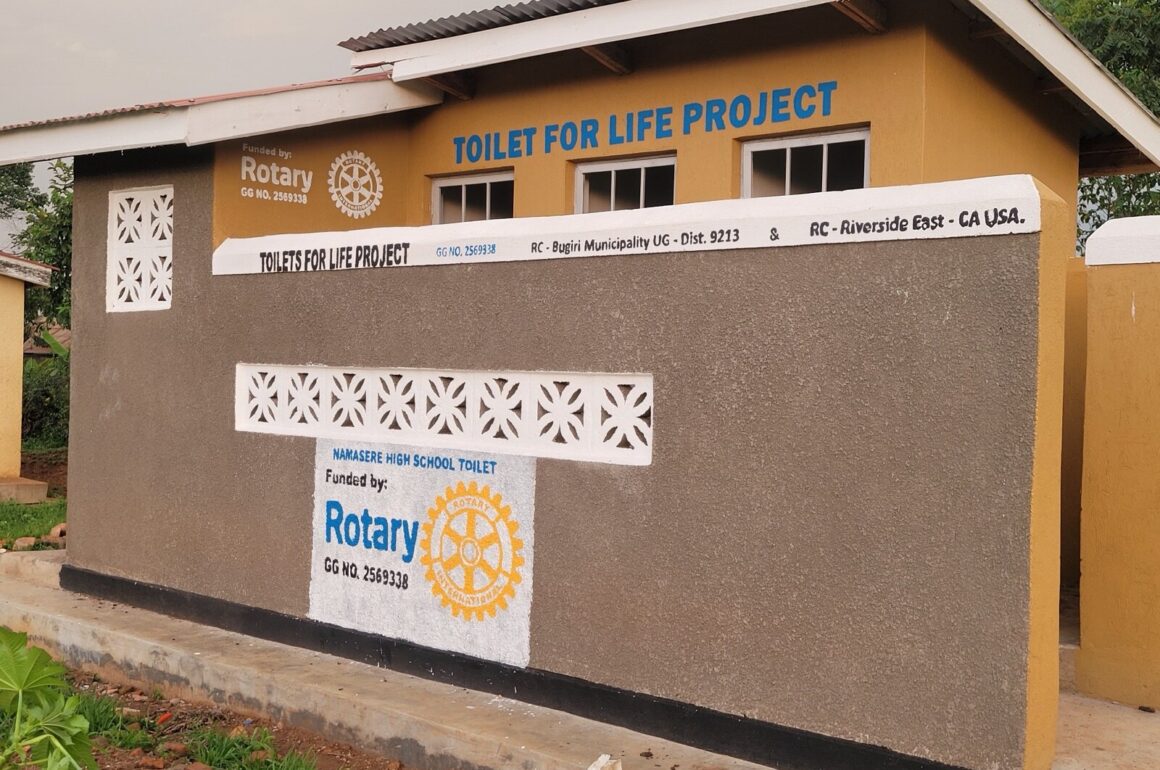
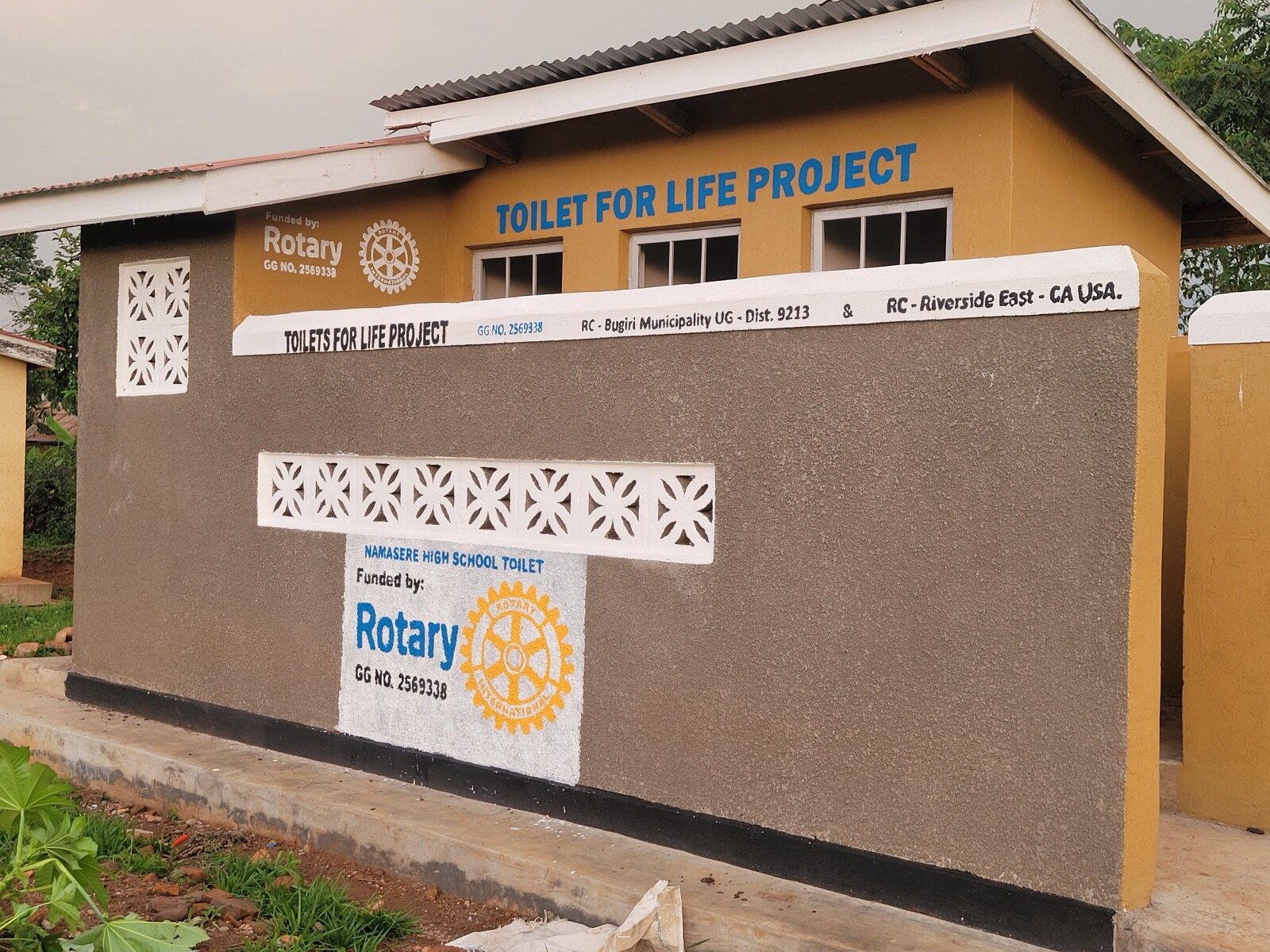
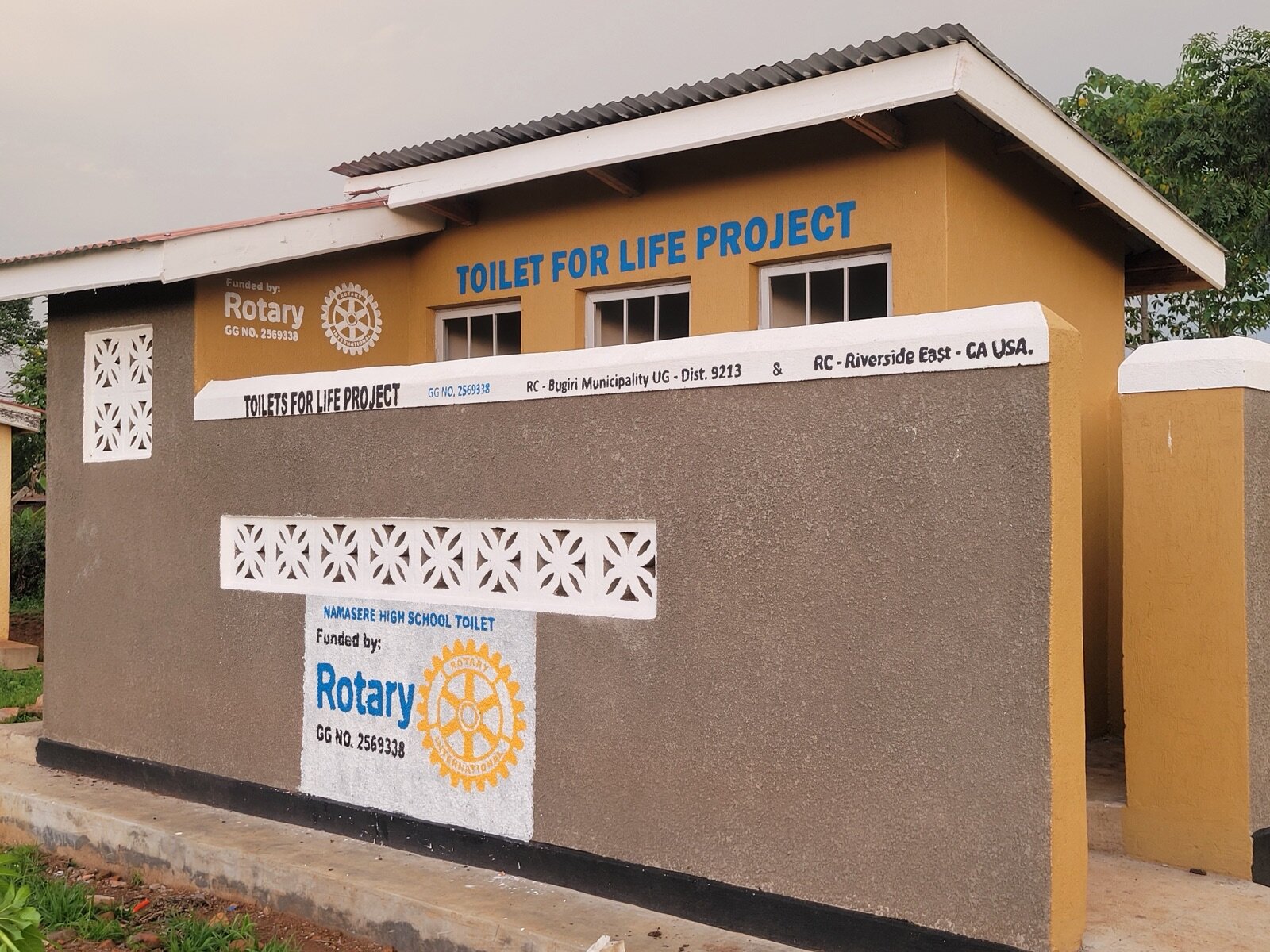
- Namasere High Secondary School
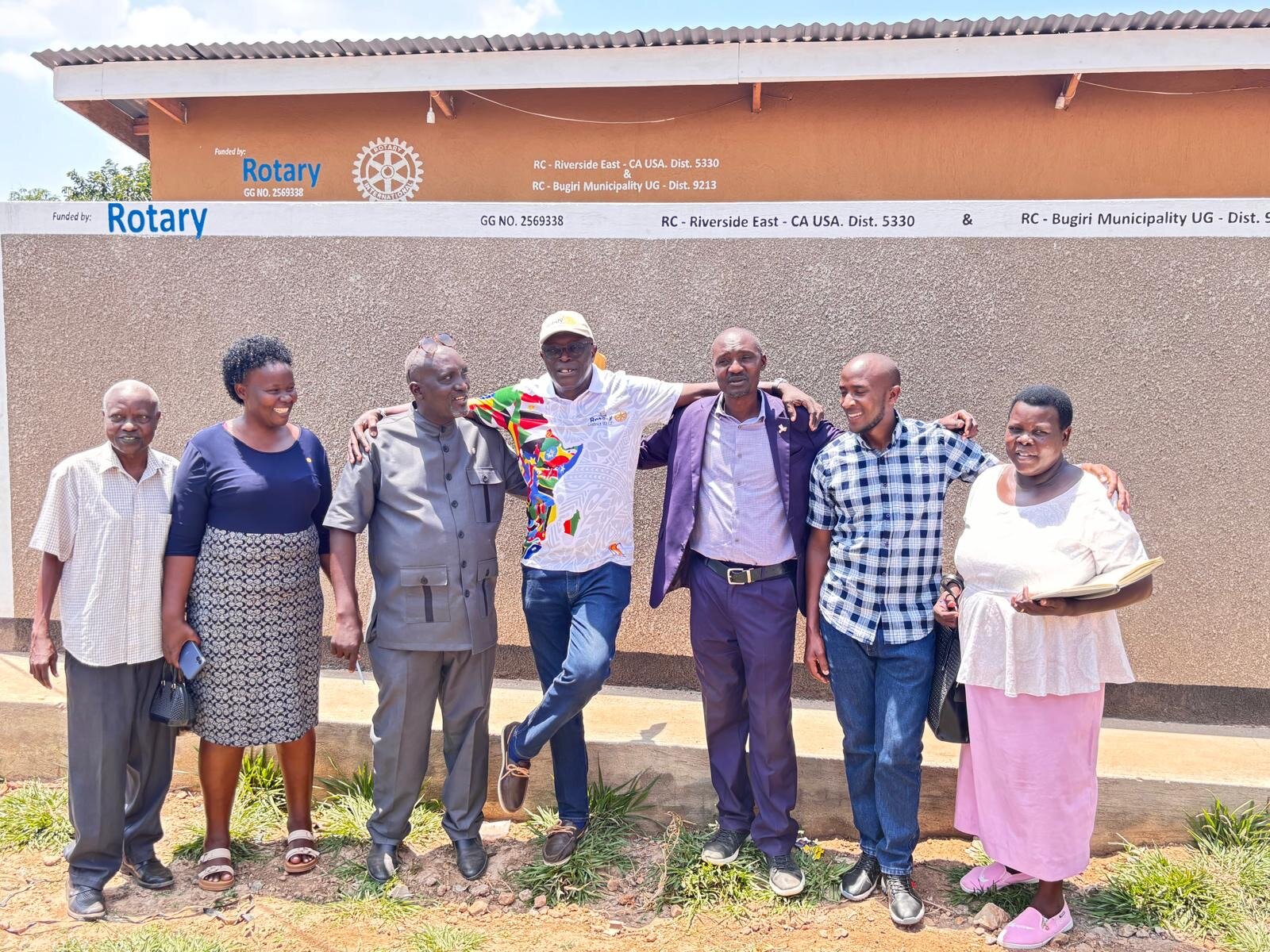
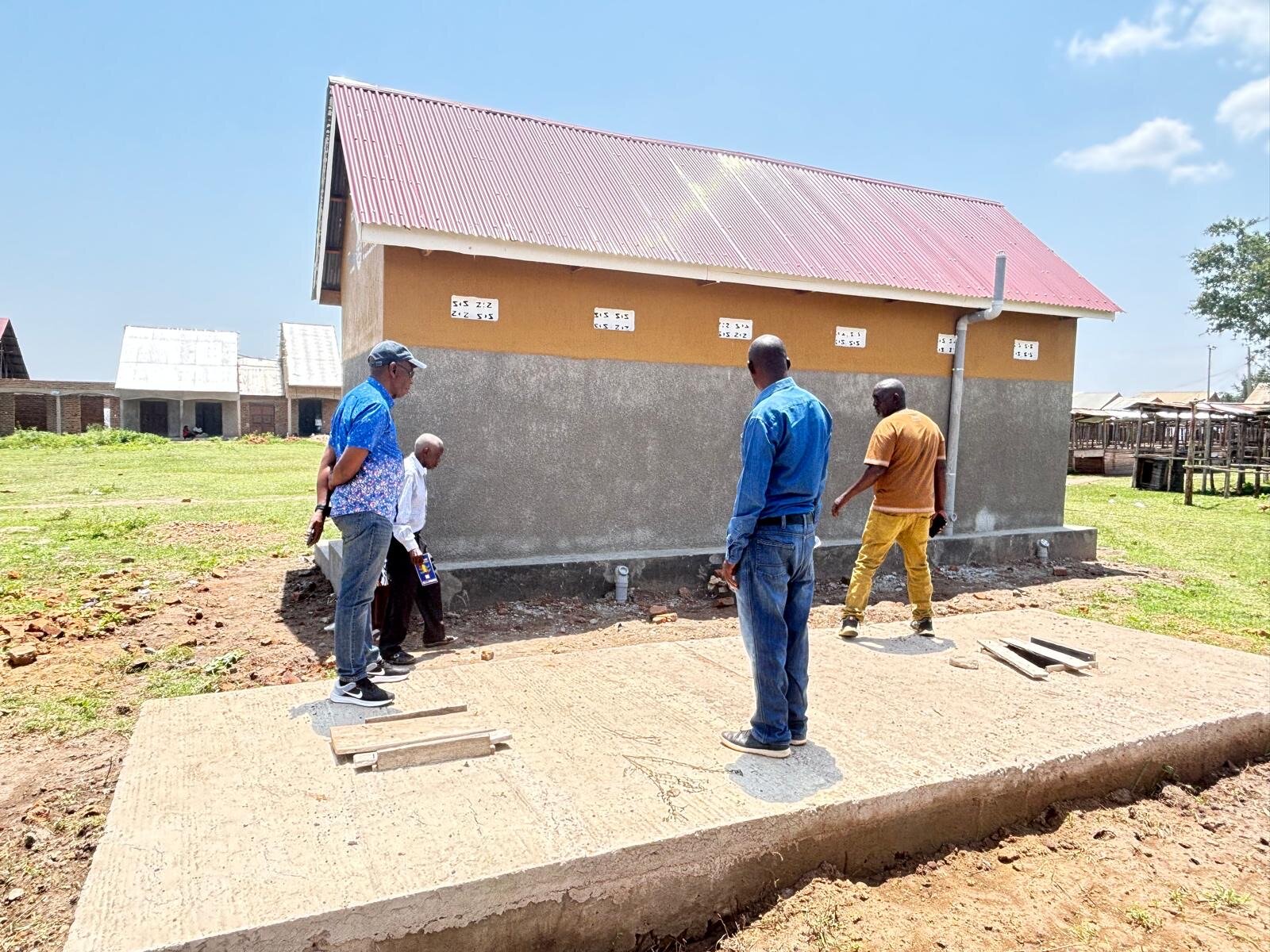
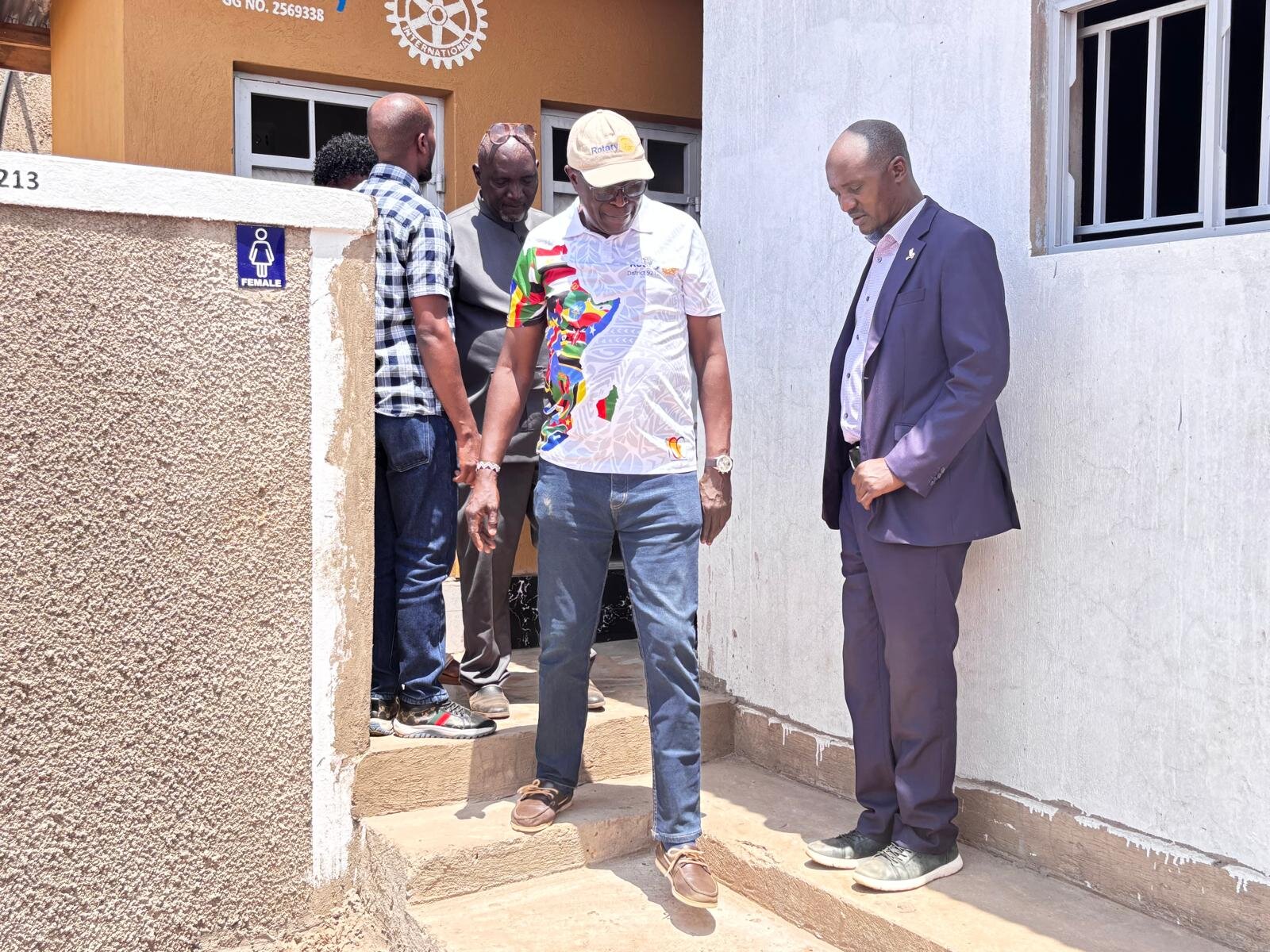
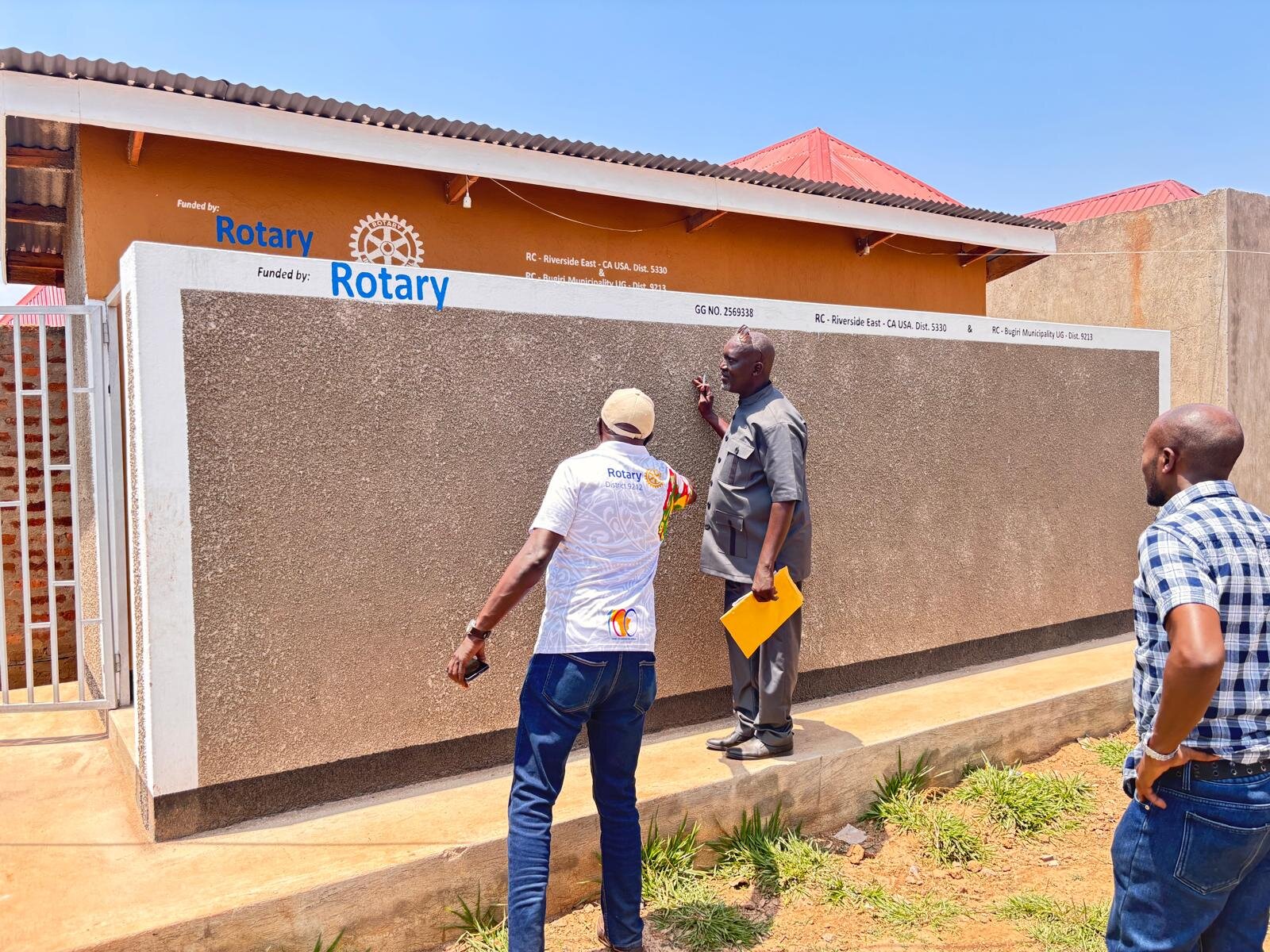
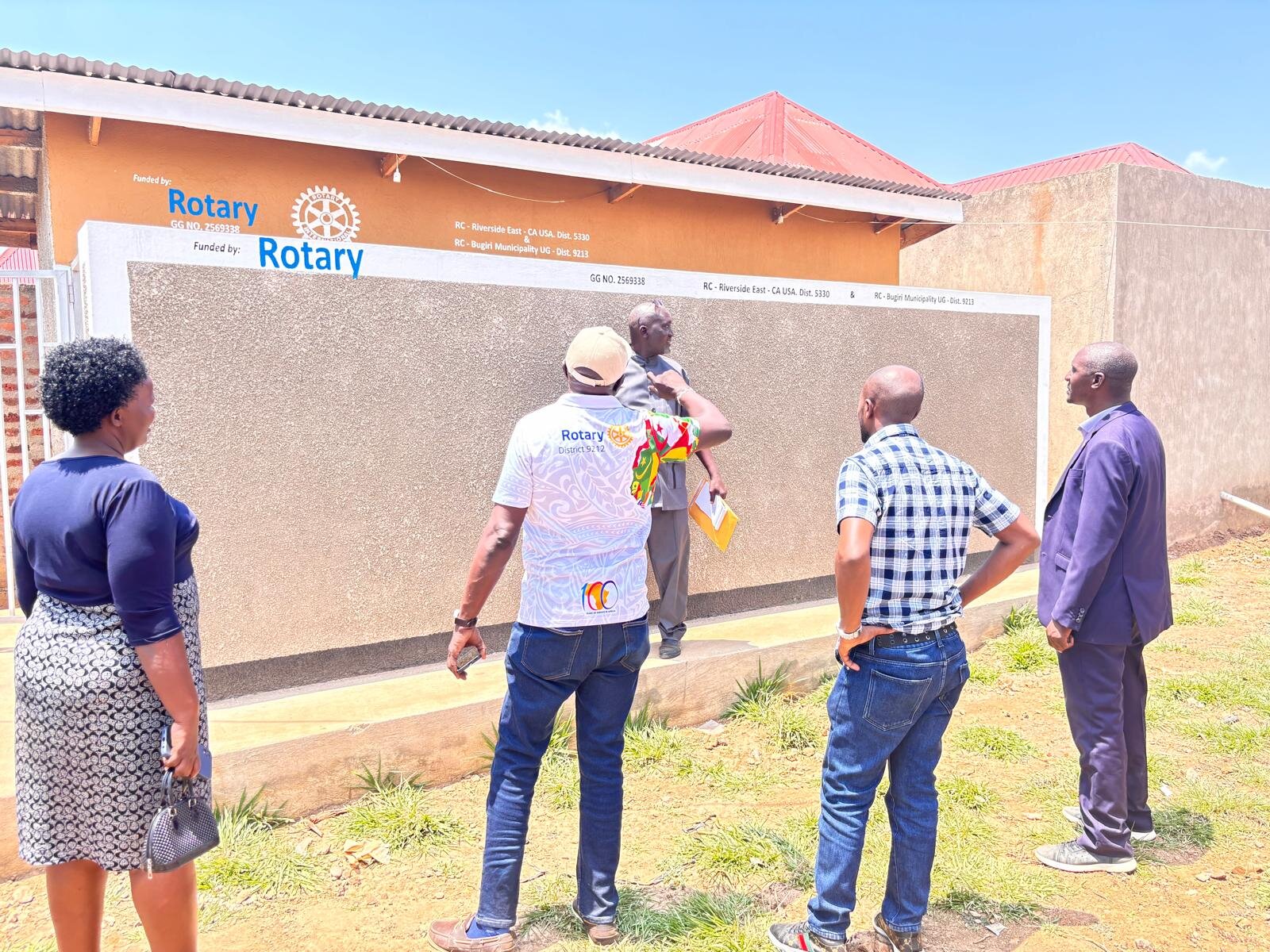
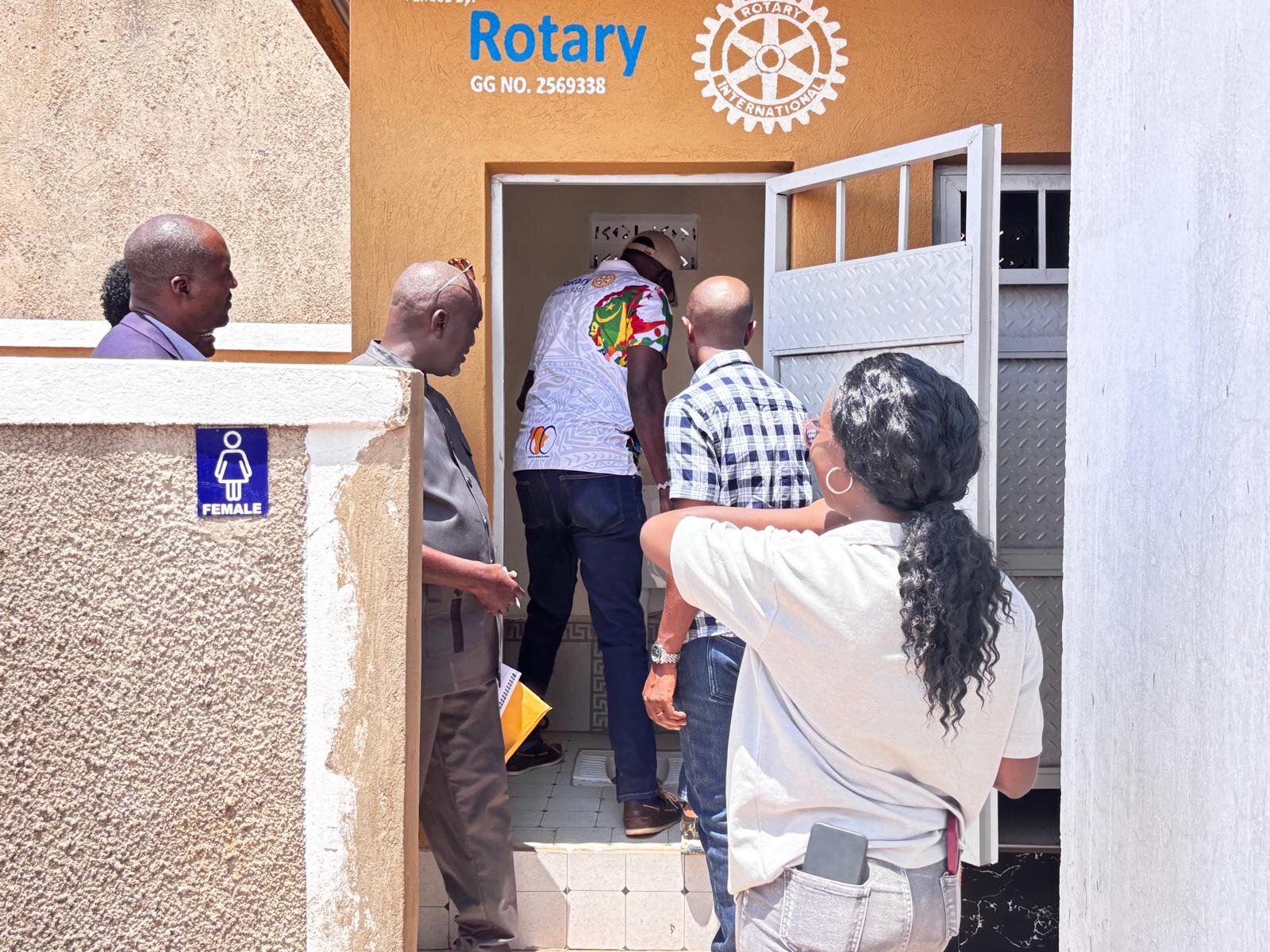
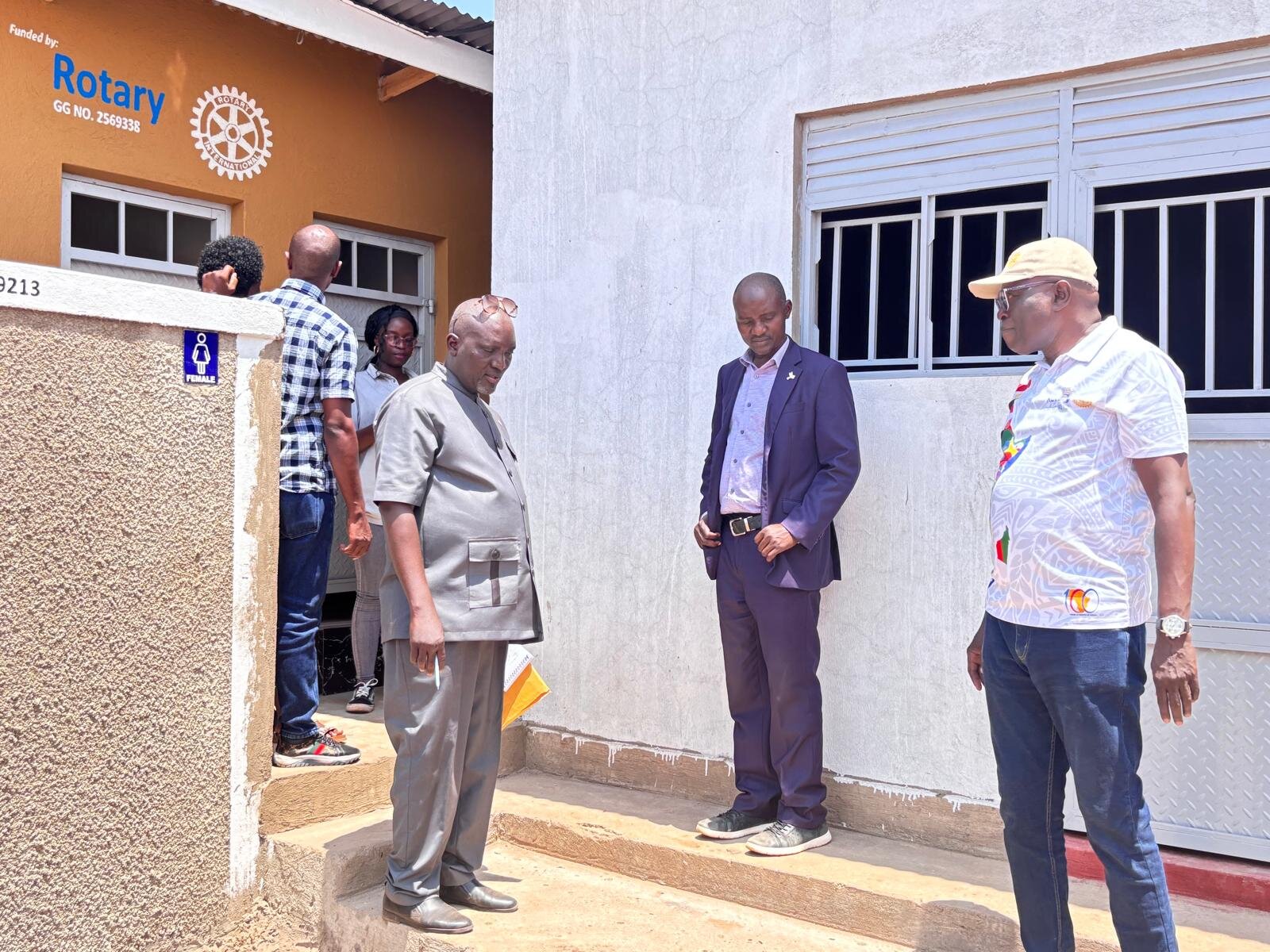
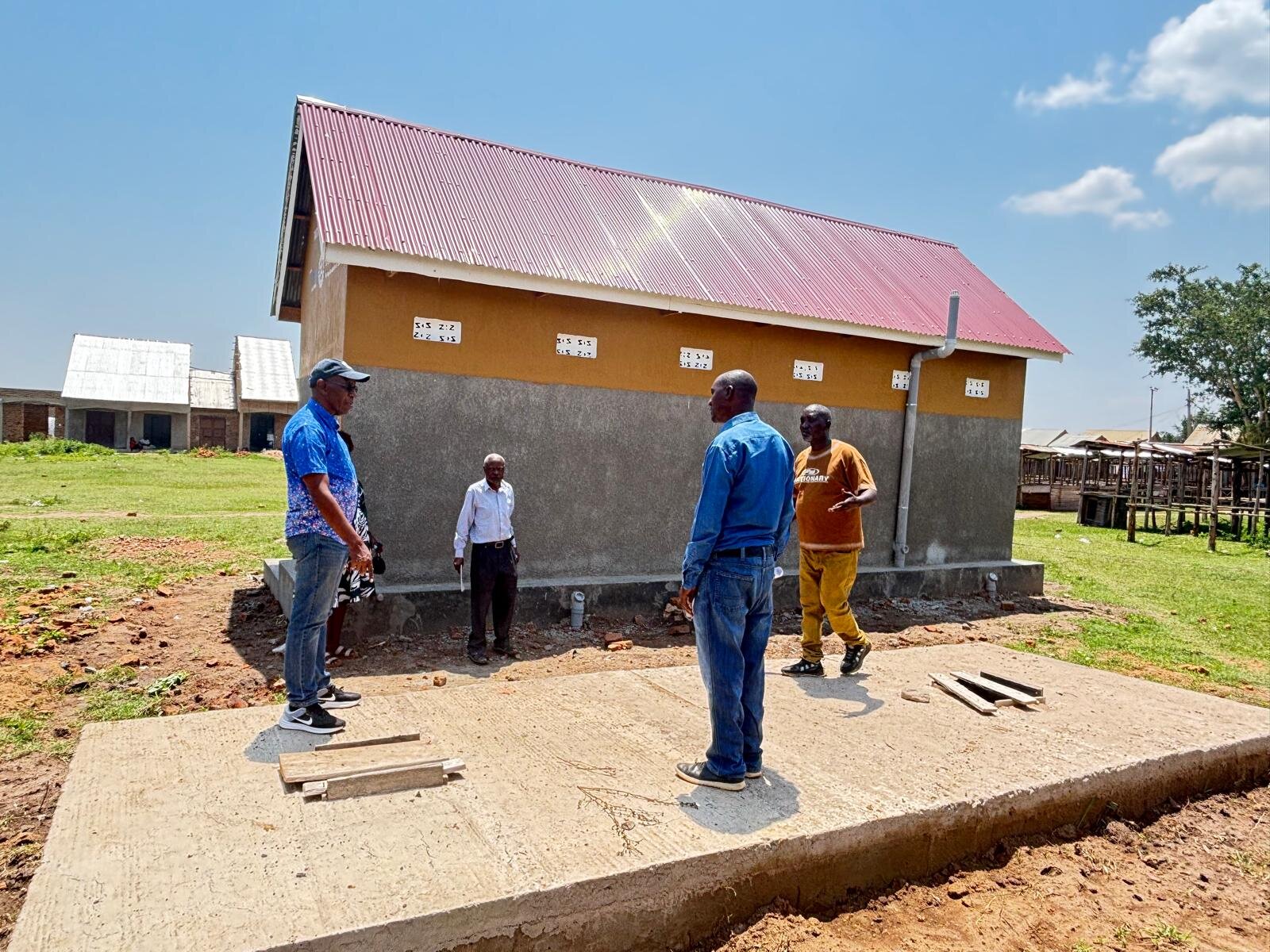
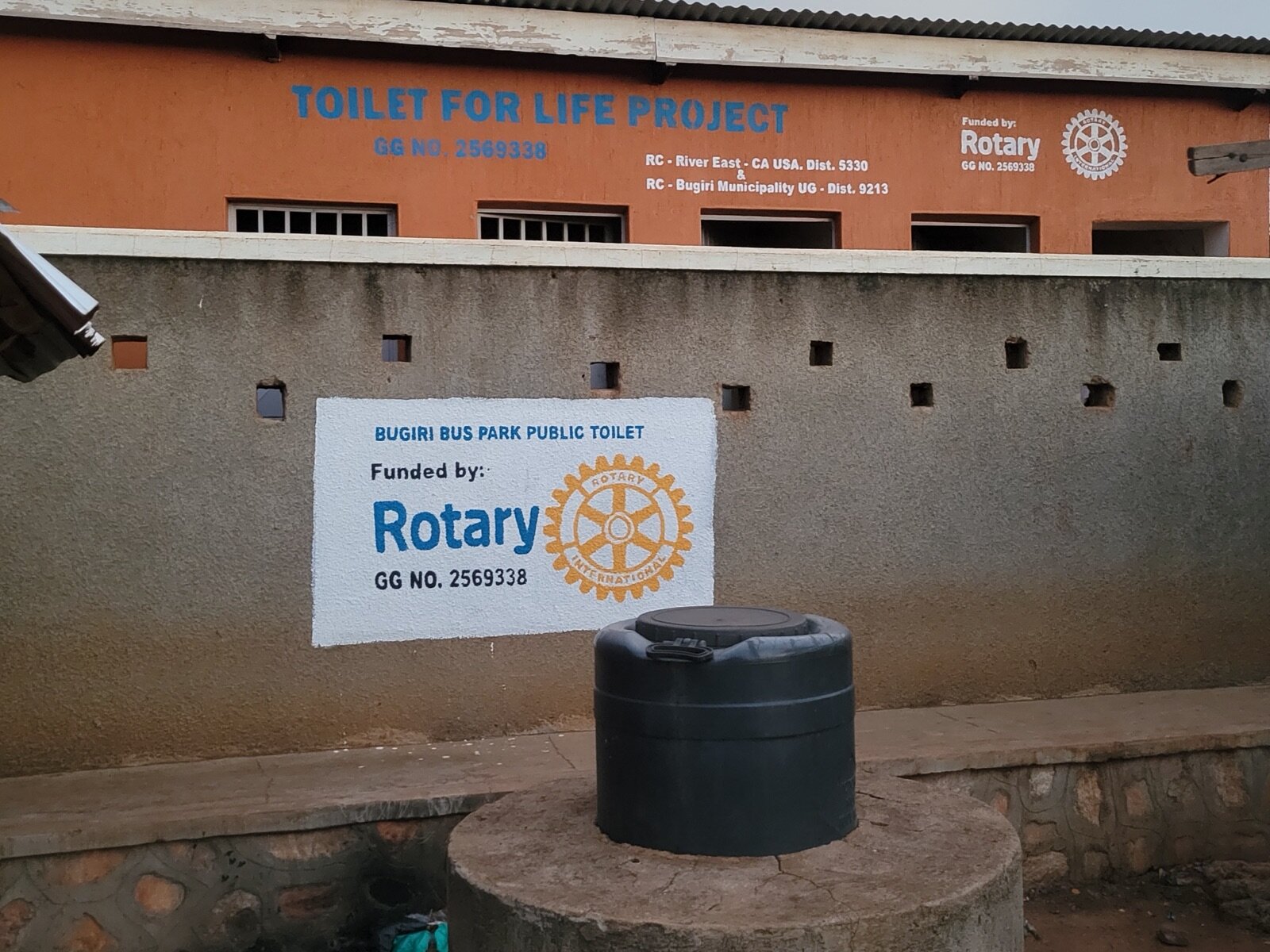
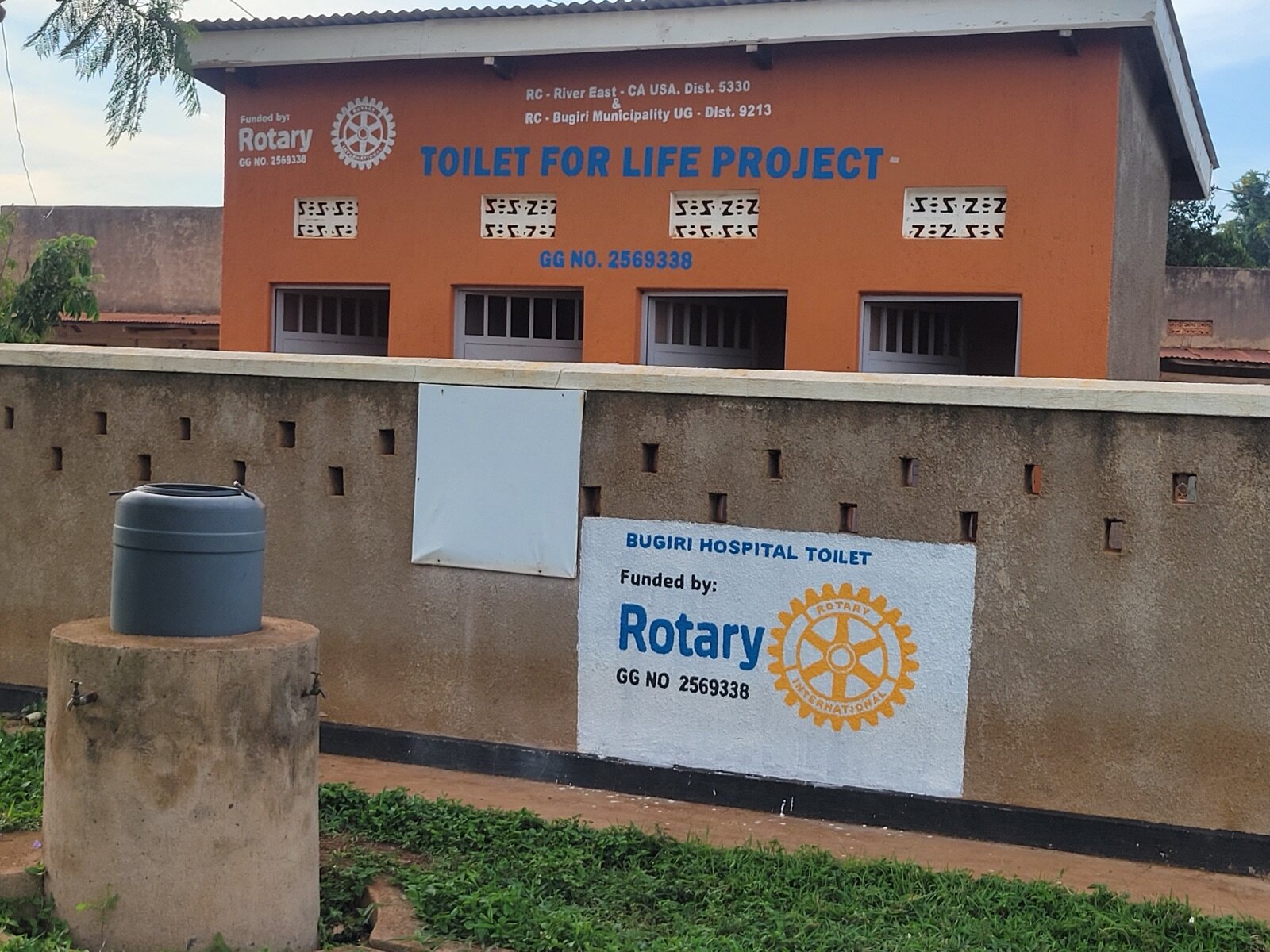
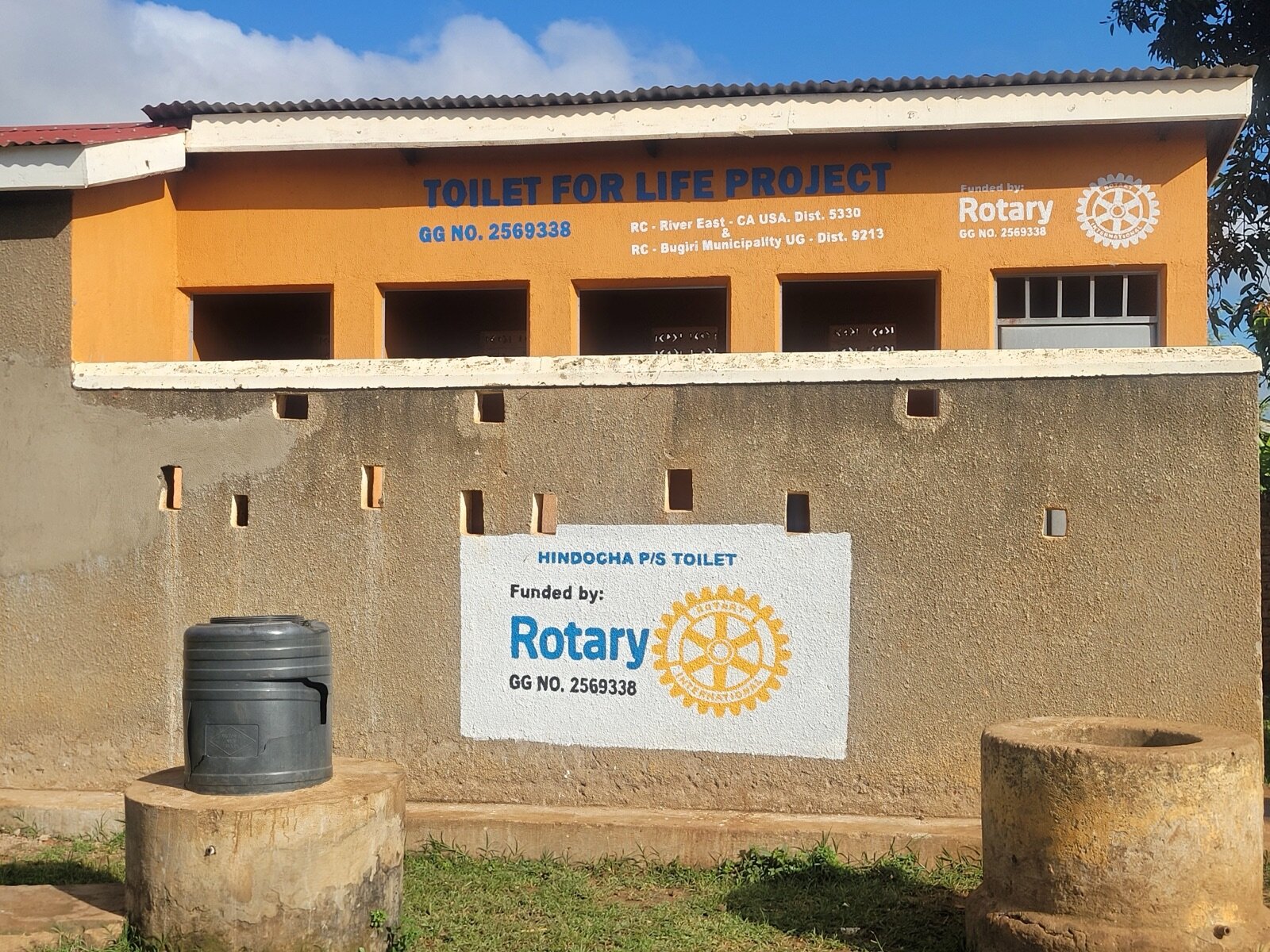
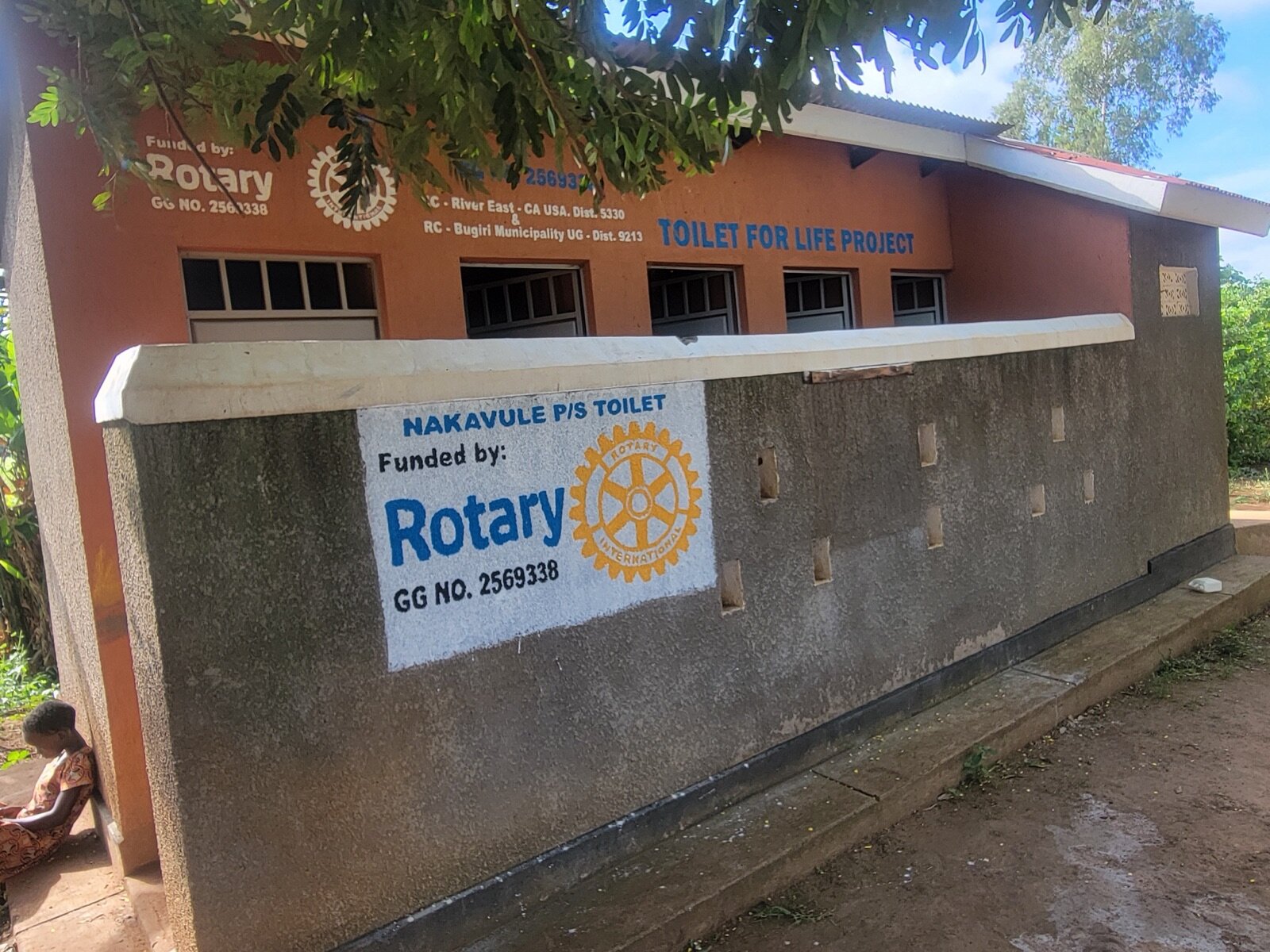
Each has six stances (two for women, two for men, one accessible stance for persons with disabilities, and one urinal), separate shower units for men and women, tap-water connections, and handwashing stations. Painted signage on each block credits Rotary, the Rotary Club of Bugiri Municipality, and Riverside East Rotary.
Two Aquonic wastewater treatment systems
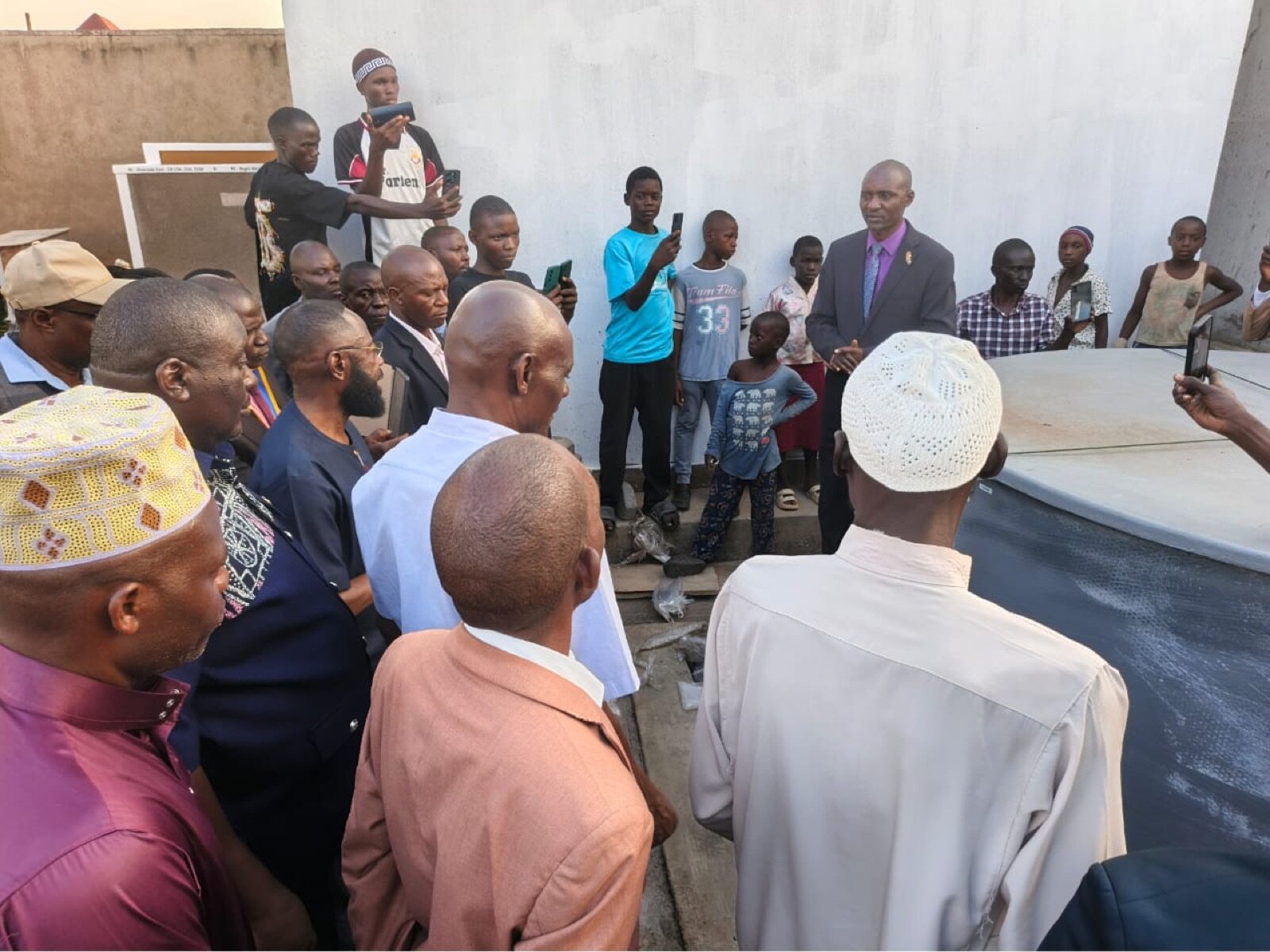
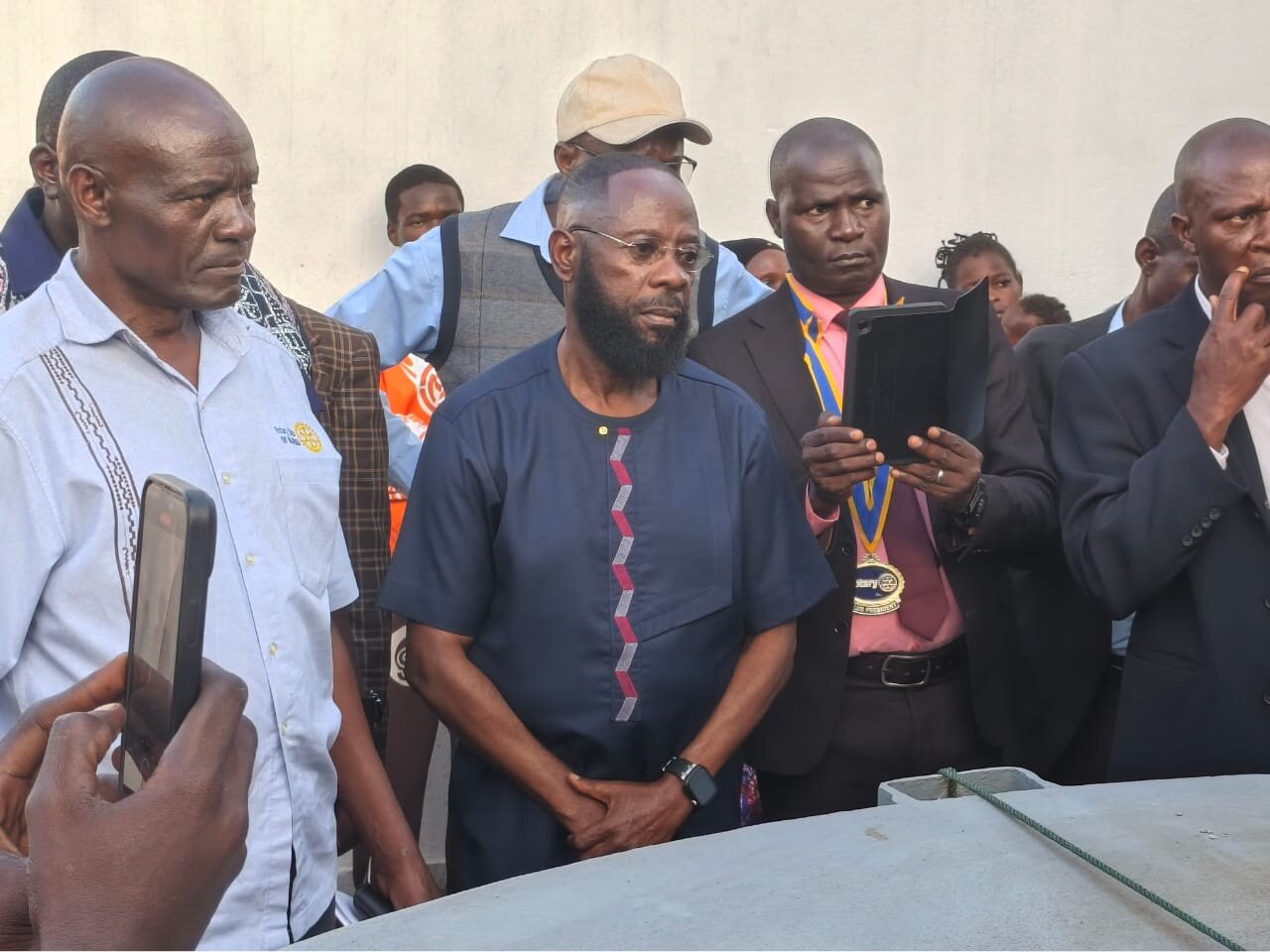
Two Aquonic treatment tanks were purchased in Bangkok, Thailand, shipped to Uganda, cleared through Entebbe, and trucked to Bugiri. They are installed at the Kireka-Ndifakulya community toilet and at the research toilet at ITT Vocational Training Centre. In June and July 2026 the tanks were housed on concrete bases, wired, and connected to tap water, and raised water tanks were added.
The systems treat and recycle wastewater on site, which reduces the demand for fresh water. The technology was not previously available in the municipality, and the two sites will serve as demonstrations for other communities.
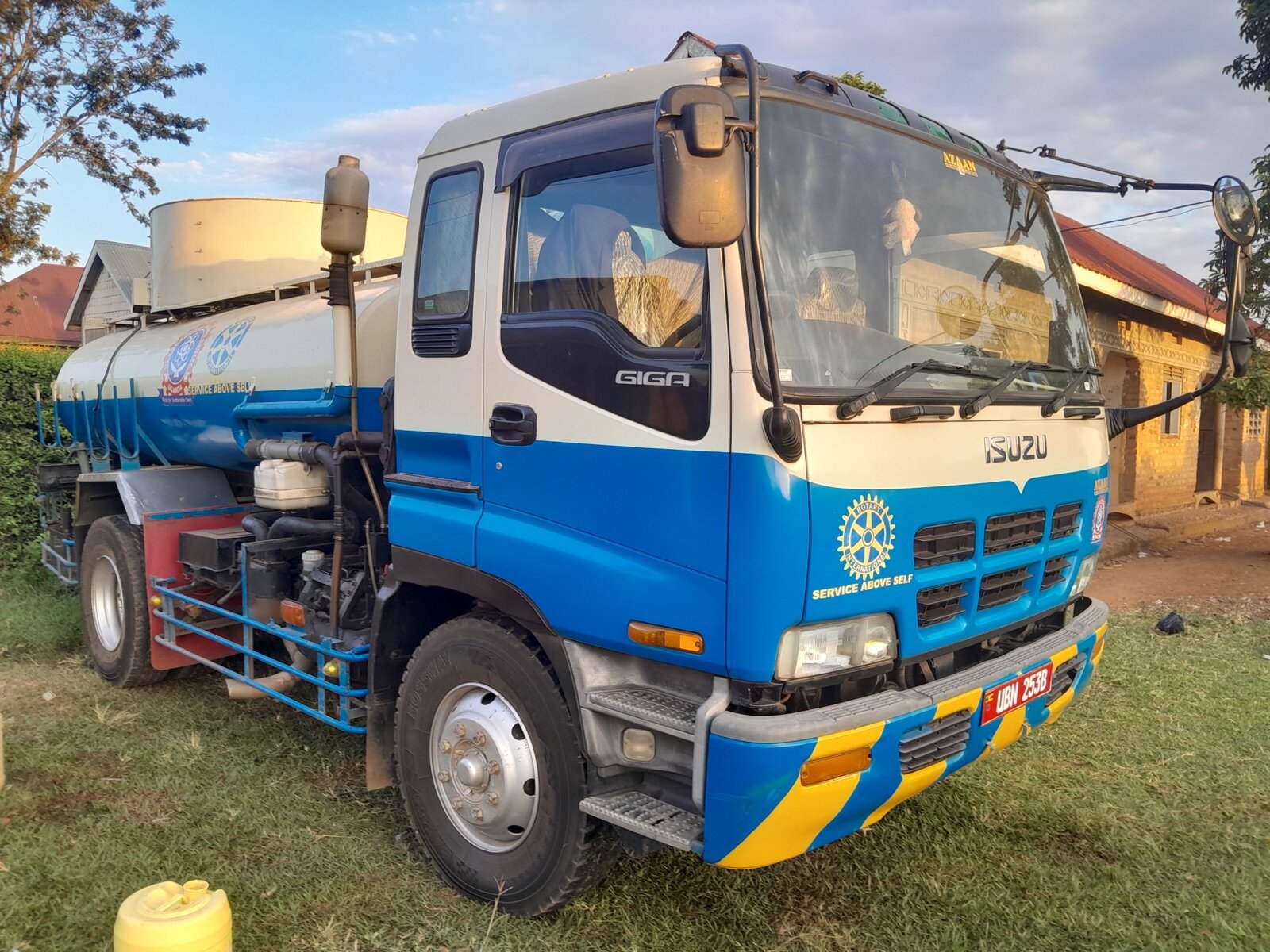
Two municipal trucks
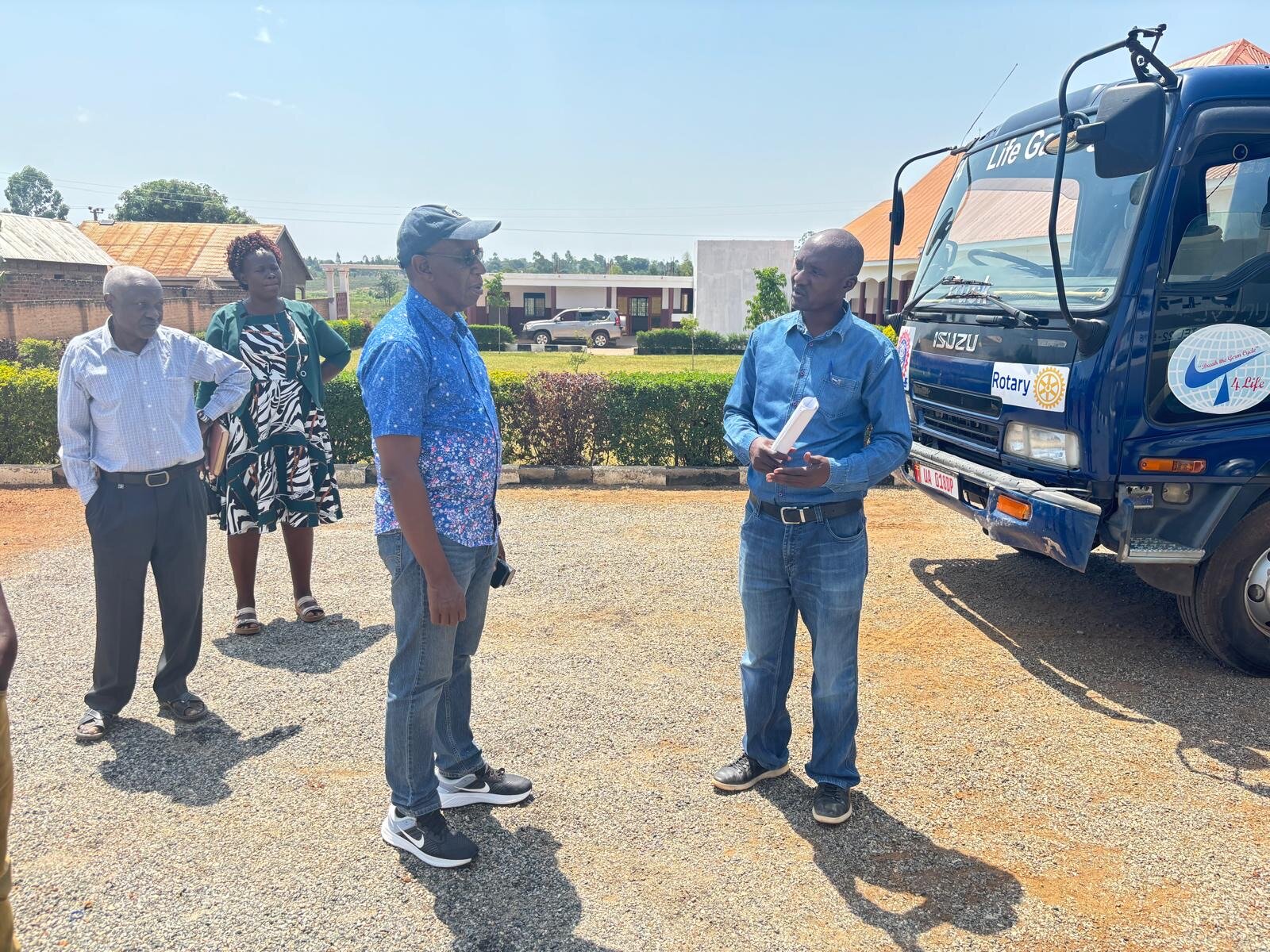
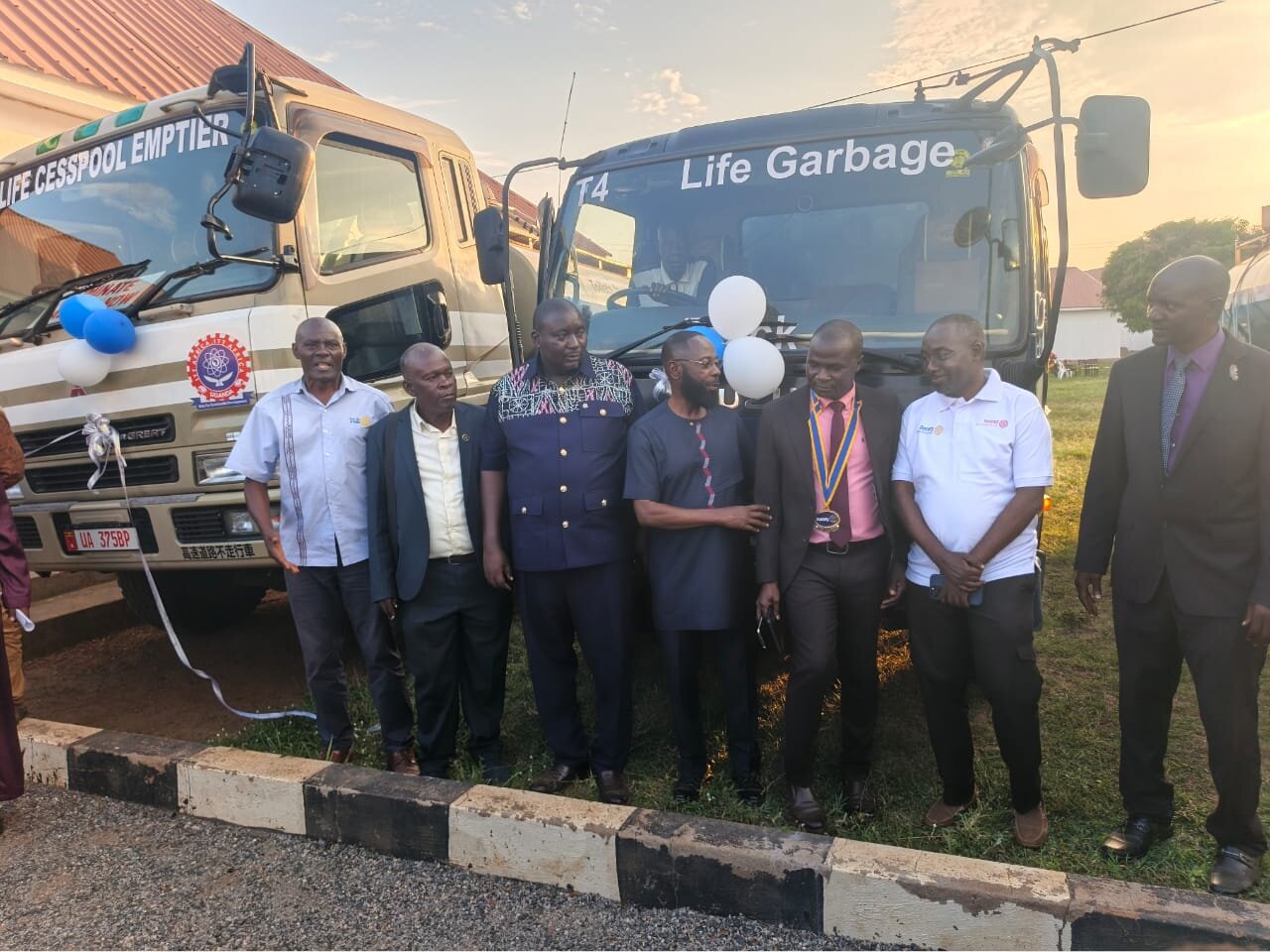
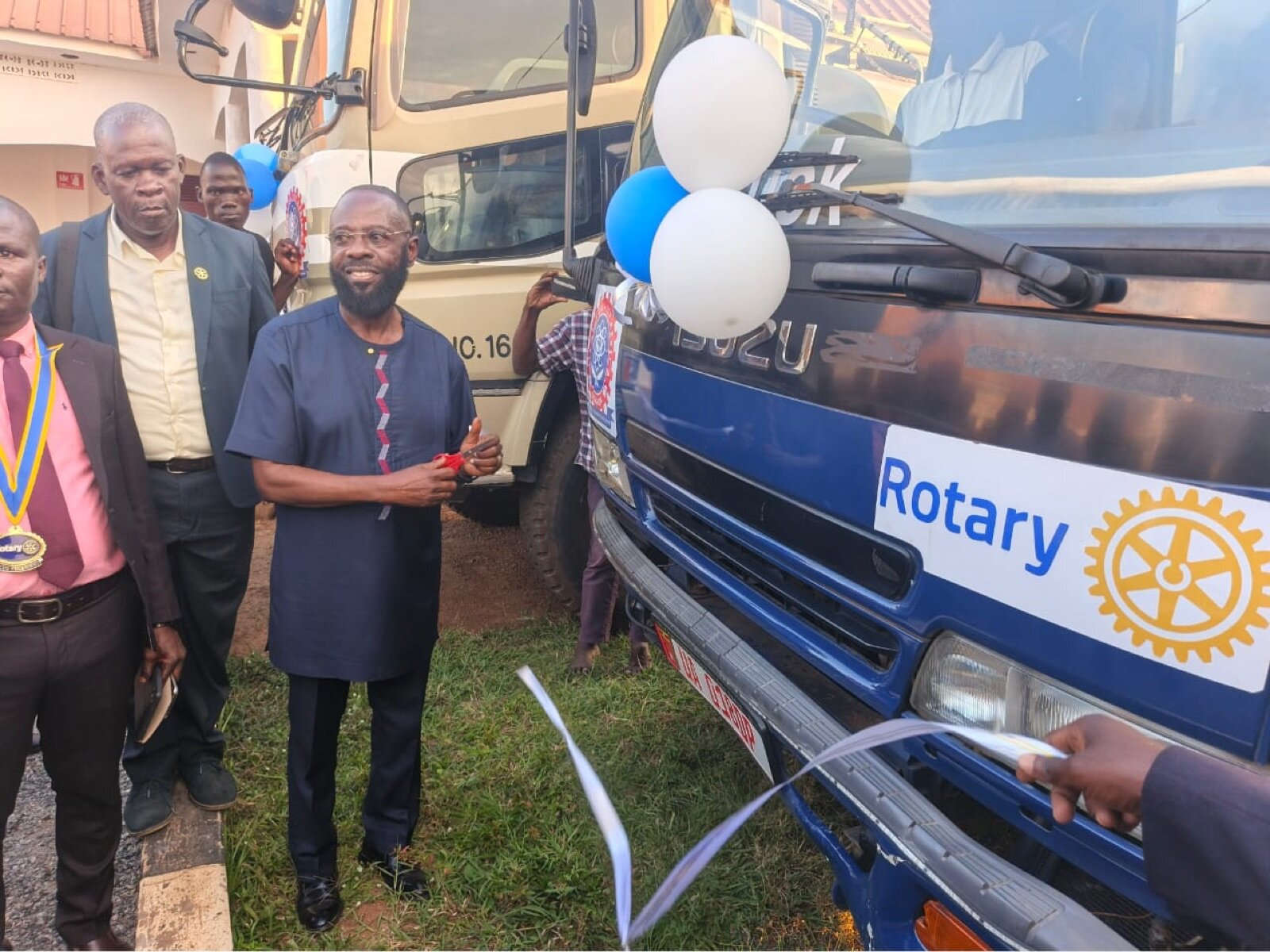
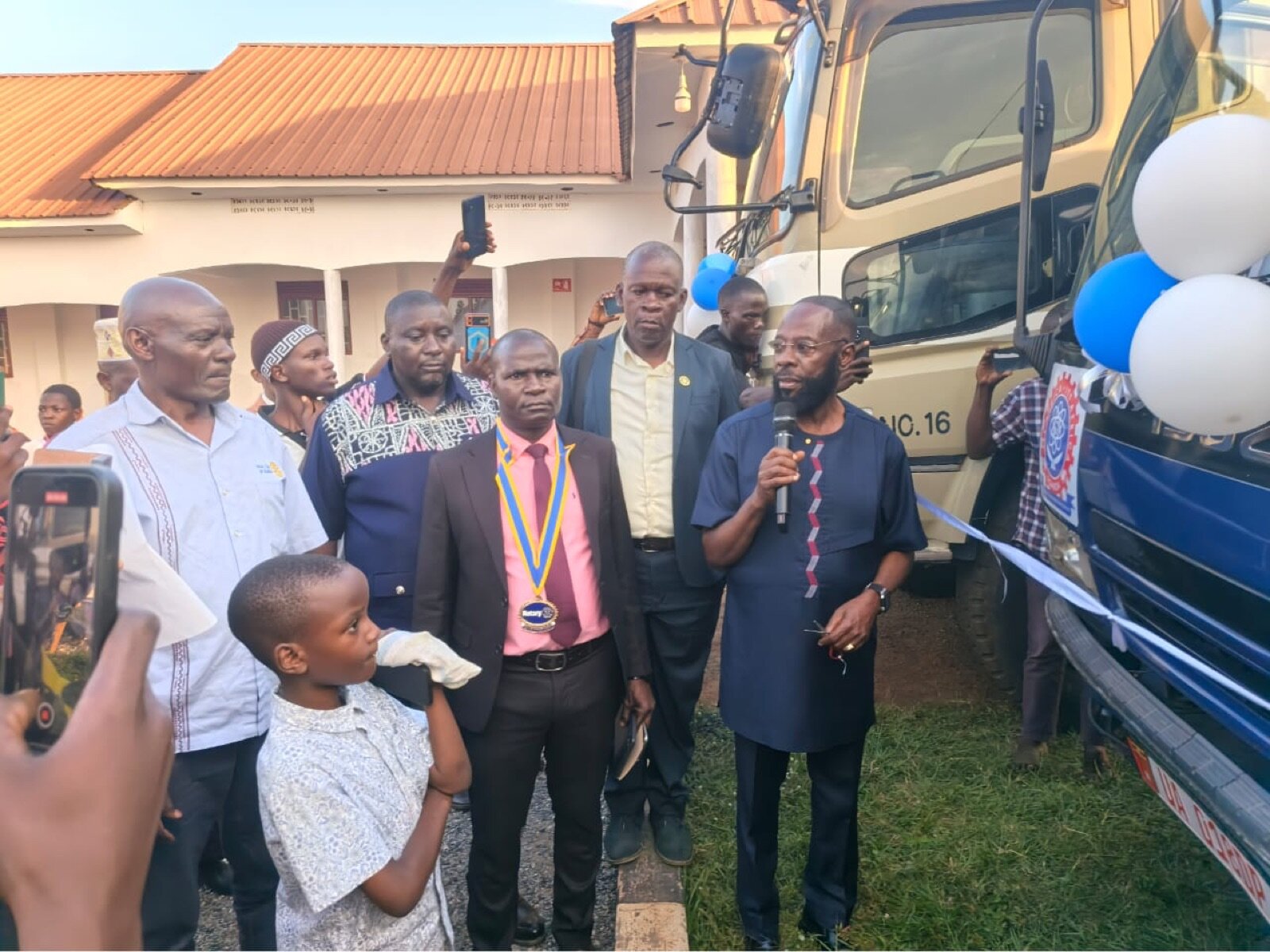
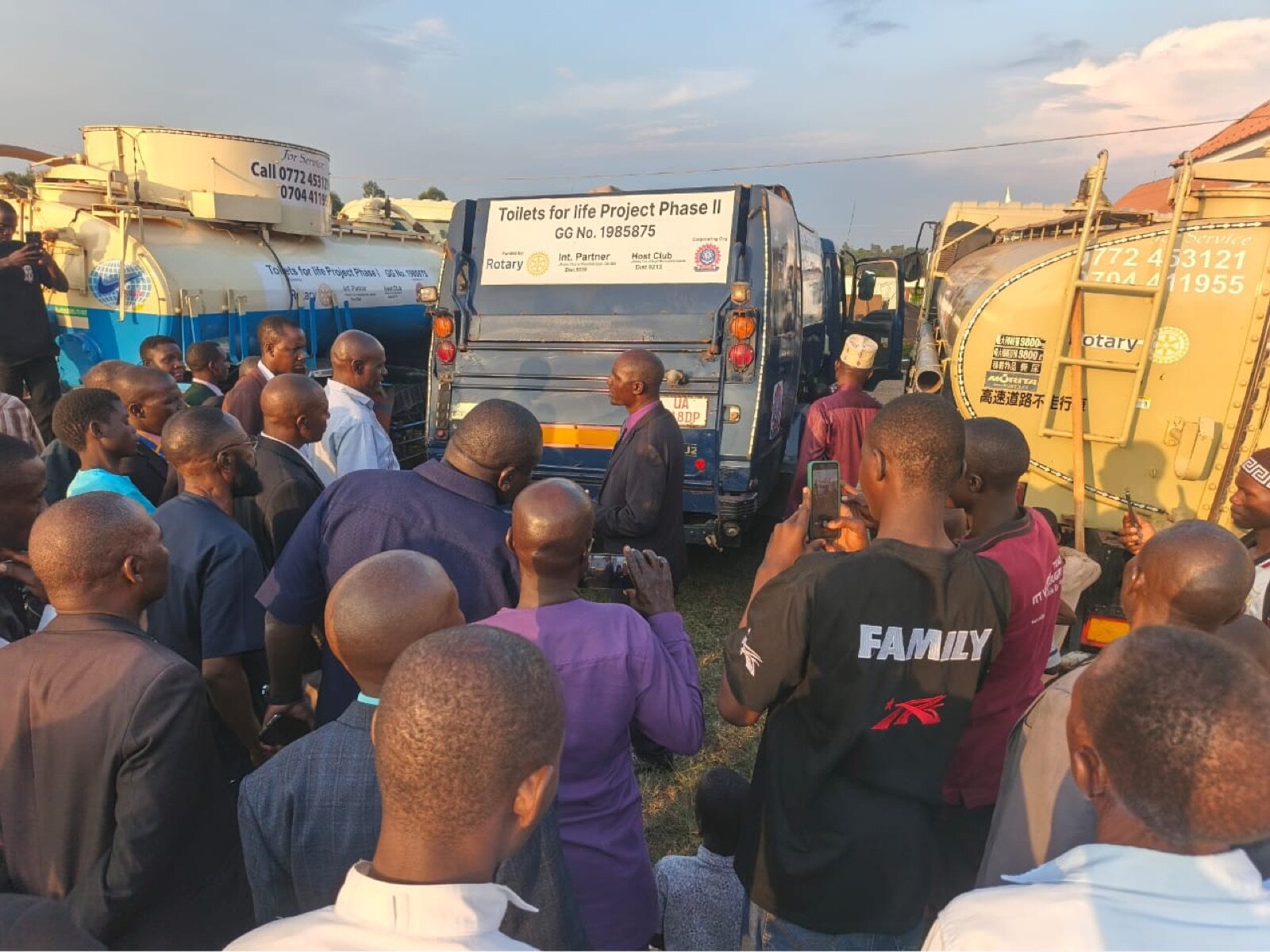
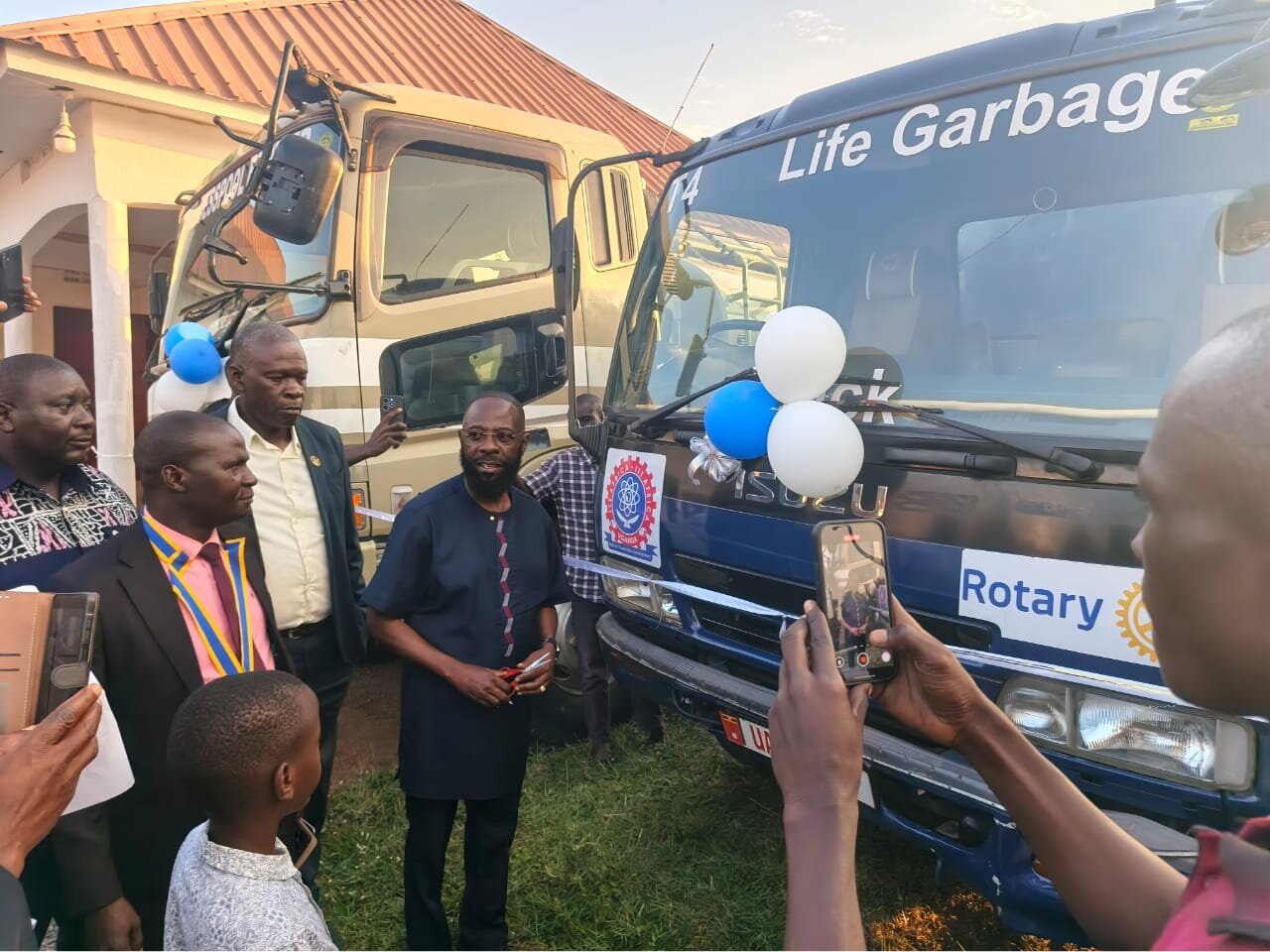
A 10,000-litre cesspool emptier empties school and public toilets and carries the sludge away for treatment. It serves all ten Toilets 4 Life facilities, five from each phase, as well as other sites in the municipality.
A 4-tonne garbage collection truck runs weekly refuse collection across Bugiri Municipal Council, with communities loading the garbage themselves as their contribution to the project. Regular collection means less dumping in roadsides and drainage channels, fewer blocked drains, and fewer breeding grounds for flies, rodents, and mosquitoes.
With the two trucks, Bugiri Municipal Council can keep the new toilets emptied and the town’s waste collected after the grant ends.
The year in brief
- December 2025. Two days of hygiene, sanitation, and wastewater management training for WASH committee members, facility cleaners, and garbage and cesspool staff. A specialist from SCGC Thailand travels to Bugiri to train 20 people on operating and maintaining the Aquonic tanks.
- January 2026. Community adoption meetings are held on 10 January. Visiting Rotarians from California join local leaders for the meetings and for a radio talk show.
- June and July 2026. The Aquonic tanks are housed, installed, and connected, and water connections are completed.
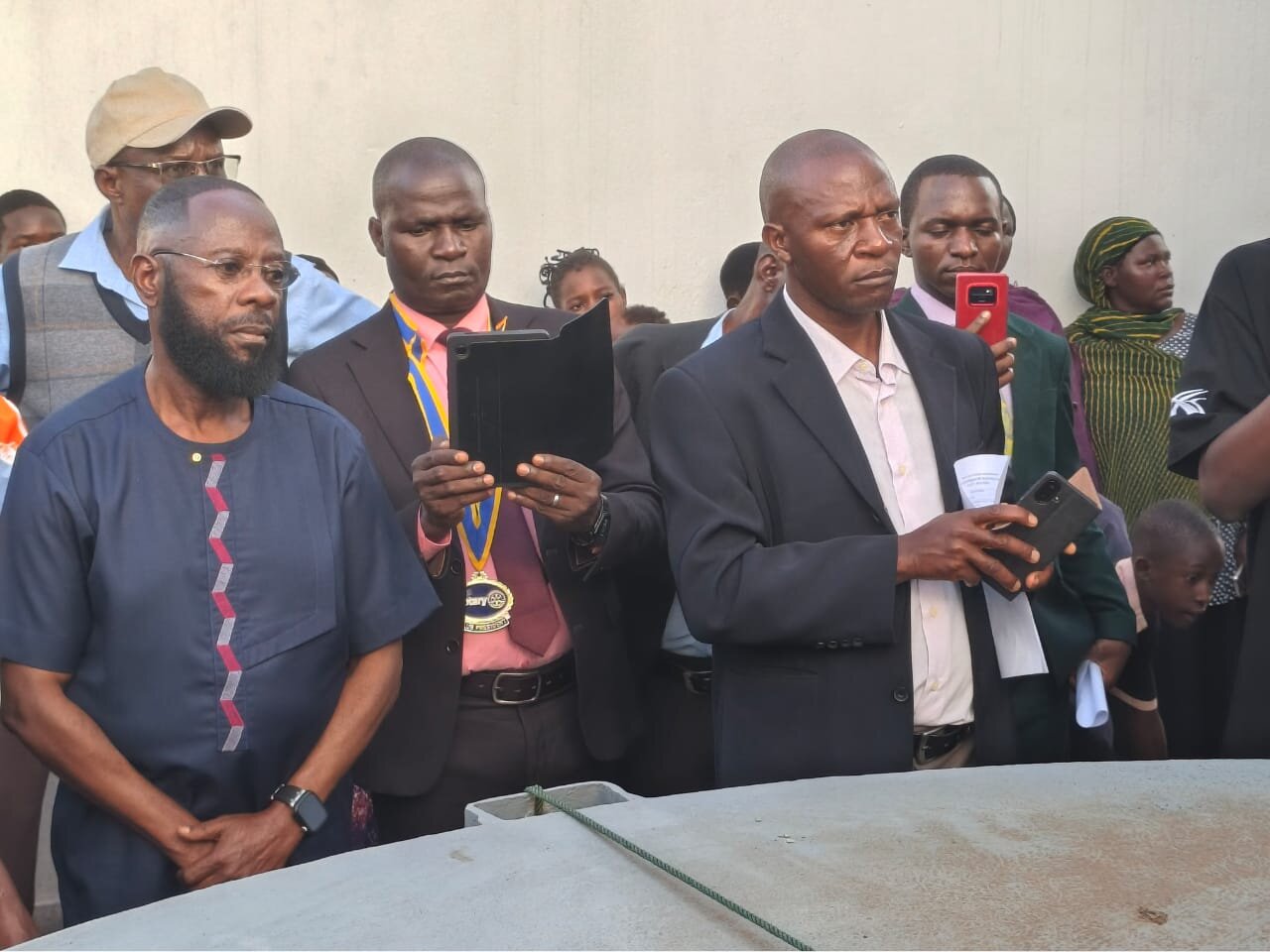
- July 2026. The project is commissioned by Past District Governor Edward Kakembo of District 9213.
- August 2026. A Rotary Foundation Cadre visits Bugiri to inspect and verify the work.
- November 2026. The final report is submitted with every deliverable complete.
Training and community outreach
Training. Twenty-five WASH school committee members, facility cleaners, and garbage and cesspool staff completed the two-day course in December 2025. A further 20 participants were trained on the Aquonic tanks by Attawut Kumkronng of SCGC Thailand, working with ITT Vocational Training Centre. The curriculum covered WASH committee roles, the link between water, sanitation, and waterborne infection, menstrual hygiene management, solid waste collection and disposal, and Uganda’s sanitation regulations.
WASH Committees. School WASH Committees have been established and trained at every site, and hygiene education programmes ran across all the beneficiary schools. The committees promote proper use of the facilities and look after them.
Radio. A talk show on Eastern Voice Radio in Bugiri introduced the project to the wider community. Mr. Mapesa Ayub, representing the Mayor, took part alongside visiting and local Rotarians. They discussed sanitation and public health, facilities for women, girls, and persons with disabilities, menstrual hygiene and girls’ education, and the community’s responsibility for looking after the facilities.
Inspected and verified
Rotary leaders in Uganda reviewed the work throughout.
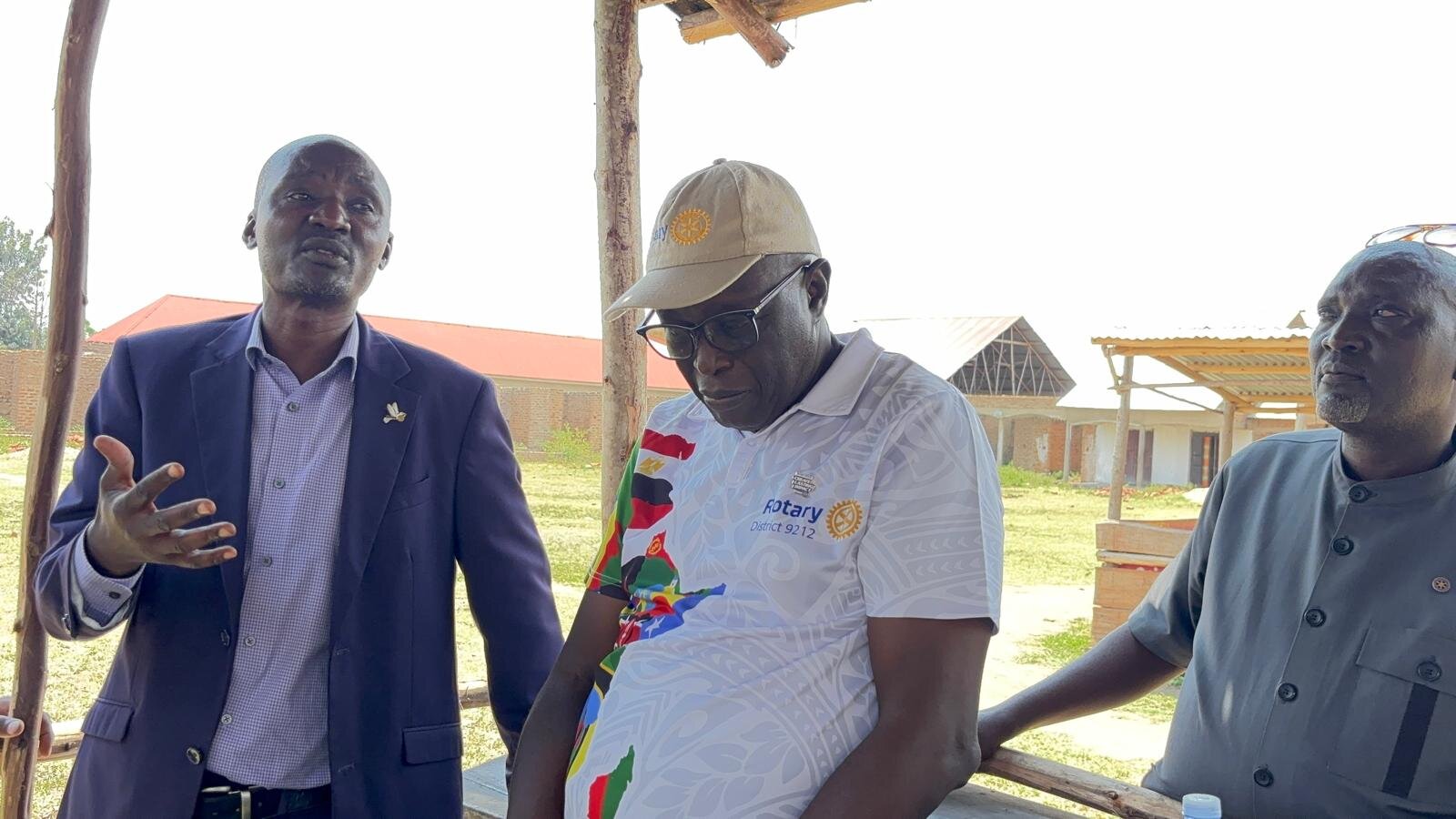
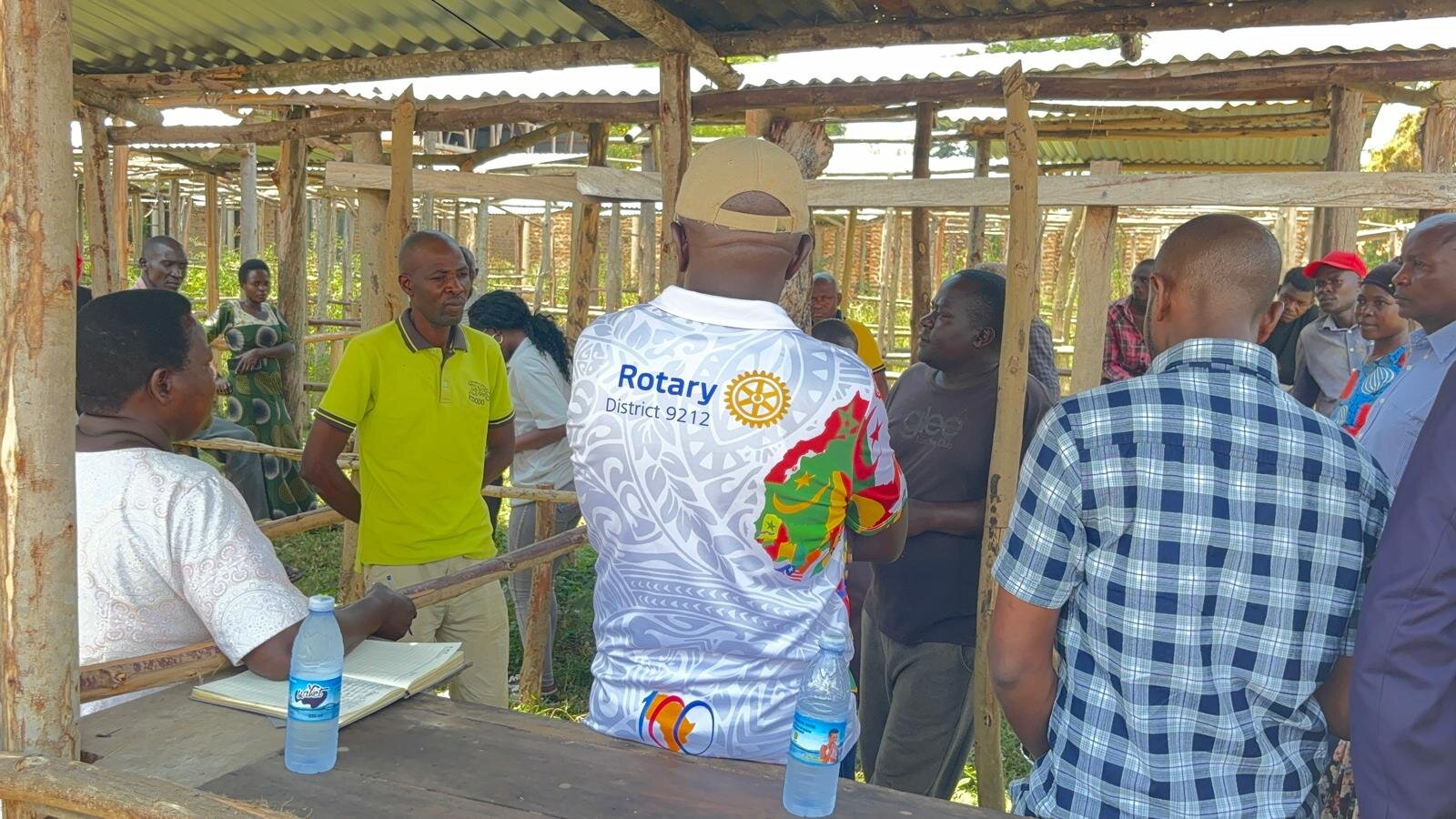
- Rtn. George Muyera, a member of The Rotary Foundation Cadre of Technical Advisers, visited the sites to inspect the facilities and confirm that the project had been implemented as planned.
- Rtn. John Magezi Ndamira, District 9213 Rotary Foundation Chair, made regular field visits and guided the project team.
- District Governor Gerard Obai of District 9213 visited and provided support.
- PDG Edward Kakembo commissioned the project, joined by Assistant Governors Alex Ojambo and Johnson Mutalya.
Who made it happen
Rotary Club of Bugiri Municipality hosted the grant. Jaffer Bajja Shaban served as project contact, managed implementation and reporting as he did in Phase I, and compiled the final report.
Riverside East Rotary was the international sponsor. Club member Rtn. Zubair Bakubye served as project lead. He travelled to Uganda, addressed the community meetings, took part in the radio talk show, helped facilitate the Aquonic training, and joined the inspection visits. The Bugiri club’s final report thanks him for his “endless technical and physical support during the entire project implementation.”
Rotary Club of Murrieta sent Rtn. Nancy Young, Rtn. Doreen Tate, and Rtn. Mickie Evans, who travelled to Bugiri, facilitated the January community meetings, and joined the radio broadcast.
ITT-Africa was the cooperating organization, leading community mobilization, training, and reporting on the ground.
Bugiri Municipal Council was the local government partner. It operates the two trucks.
Rotary Club of Jinja has mentored the Rotary Club of Bugiri Municipality since its founding and supported the project throughout.
From Phase I to Phase II
Phase I (Global Grant #1985875) brought $61,500 to Bugiri and delivered five septic toilet blocks and one 7,500-litre cesspool truck. It was hosted by the Rotary Club of Iganga and completed in 2023.
Phase II was more than three times the size, with larger and more accessible facilities, a second truck for solid waste, and on-site wastewater treatment. This time the grant was hosted by Bugiri Municipality’s own Rotary club. Between the two phases, Toilets 4 Life has built ten sanitation facilities in the municipality.
Read more on the Toilets 4 Life project page, or see our August post on the Phase II launch.
What it means for Bugiri
- Less exposure to unsafe sanitation and badly managed waste, and a lower risk of waterborne disease
- Safe, private, accessible facilities for women, girls, and persons with disabilities
- Better sanitation and hygiene in schools, which helps keep children, especially girls, in class
- Wastewater, sludge, and solid waste that are treated and collected instead of dumped
- A municipal council equipped to keep public toilets working and public spaces clean
The project partners will track the long-term effects on health and behaviour through routine monitoring.
What it needs to last
The approved work is complete. The final report also lists what is needed to keep it working.
Menstrual hygiene. Disposal bins and supporting facilities were not in the original budget, and turned out to be essential for the privacy of women and girls. More are needed across the project sites.
Sludge treatment. The municipality relies on a lagoon originally built to serve Bugiri Hospital. It is not sized for municipal demand and is nearly full. Bugiri Municipal Council has asked for a dedicated faecal sludge treatment lagoon to serve schools, health facilities, markets, and community toilets. Without one, the new sanitation system will be hard to sustain.
Running costs. The trucks need fuel, servicing, and staff, and the facilities need cleaning, water, and repairs. The report recommends a dedicated operating budget and asks that the facilities and vehicles be included in the municipality’s own plans.
For future projects, the report recommends involving political and municipal leaders from the start, budgeting for operating costs and menstrual hygiene up front, planning treatment and collection alongside construction, and continuing to train the committees who look after the facilities.
Thank you
In its final report, the Rotary Club of Bugiri Municipality thanks The Rotary Foundation for its support, and recognizes Riverside East Rotary for its “financial support, technical guidance, international partnership, and continued commitment to the successful implementation of the project.”
Riverside East Rotary thanks Jaffer Bajja Shaban and the Rotary Club of Bugiri Municipality, ITT-Africa, Bugiri Municipal Council, our friends at the Rotary Club of Murrieta, the leaders of District 9213, and everyone who has supported Toilets 4 Life across both phases.
More photos
Commissioning
Visits and inspections
The facilities
Final report
The final pictorial report for Phase II, compiled by Jaffer Bajja Shaban, is available here: Toilets for Life Phase II Final Pictorial Report (PDF, 14 MB).